

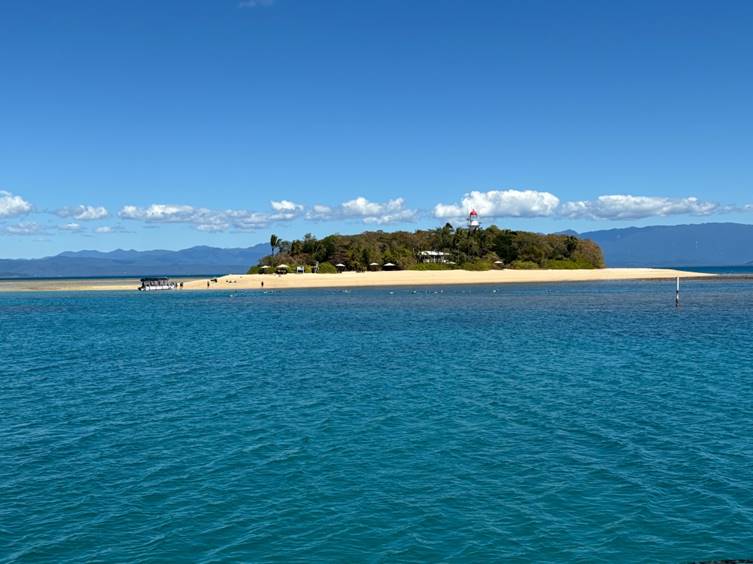
Located 15km off the coast of Port Douglas, Low Isles is home to one of Queensland’s smallest museums. But don’t let its diminutive size fool you. Inside this tiny building you will find navigational and coral science artefacts that showcase the history of one of Queensland’s greatest natural wonders, the Great Barrier Reef.
In 2023 I was thrilled to meet Ren and Col Musson, Low Isles’ caretakers and members of the Low Isles Preservation Society (LIPS). They help run the little island museum and wanted some advice about preserving an old telescope. Our discussions led to the development of a project, meetings with GBRMPA and grant applications. Before I knew it, the funding was approved, and I was setting sail to Low Isles on a picture perfect FNQ day.


An island museum review
On arrival, I dropped my bag at the Assistant Lighthouse Keepers Residence (yes, it was wonderful!) and began with a walk around the island. I reviewed the collection, interpretation signage and the museum displays. I also chatted with some of the tour guides to listen to the way they used the island and museum. Then I watched the way visitors spent their time in the museum and, given most were in sarongs, stinger suits or bathers, made the following note to self: didactics need to be waterproof!
To understand what changes the LIPS volunteers wanted in the museum, discussions with Ren and Col was essential. Their enthusiasm was fun, energising and informative – it was a treat to work with such generous hosts. At their encouragement, I enjoyed a swim, walking around the island after all the tourist boats had left, and watching the resident pelicans at sunset.
Inspired by the collection – creating engaging storylines
After my initial visit and research, I identified four major storylines that had potential for overall interpretation and mapped the collection against these themes
- Traditional Custodians and their relationship to sea country.
- The Low Isles lighthouse, the keepers who kept it running and the importance of navigational aids along the Great Barrier Reef.
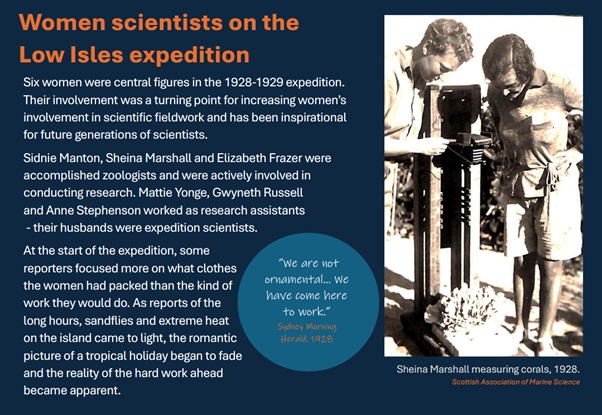
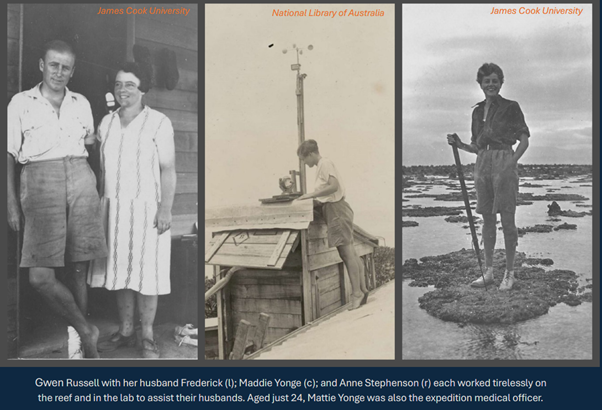
- The 1928-1929 Great Barrier Reef Expedition (GBR) and the role it has played in reef science and preservation.
- The marine diversity, UNESCO World Heritage Listing and geographical extent of the Great Barrier Reef.
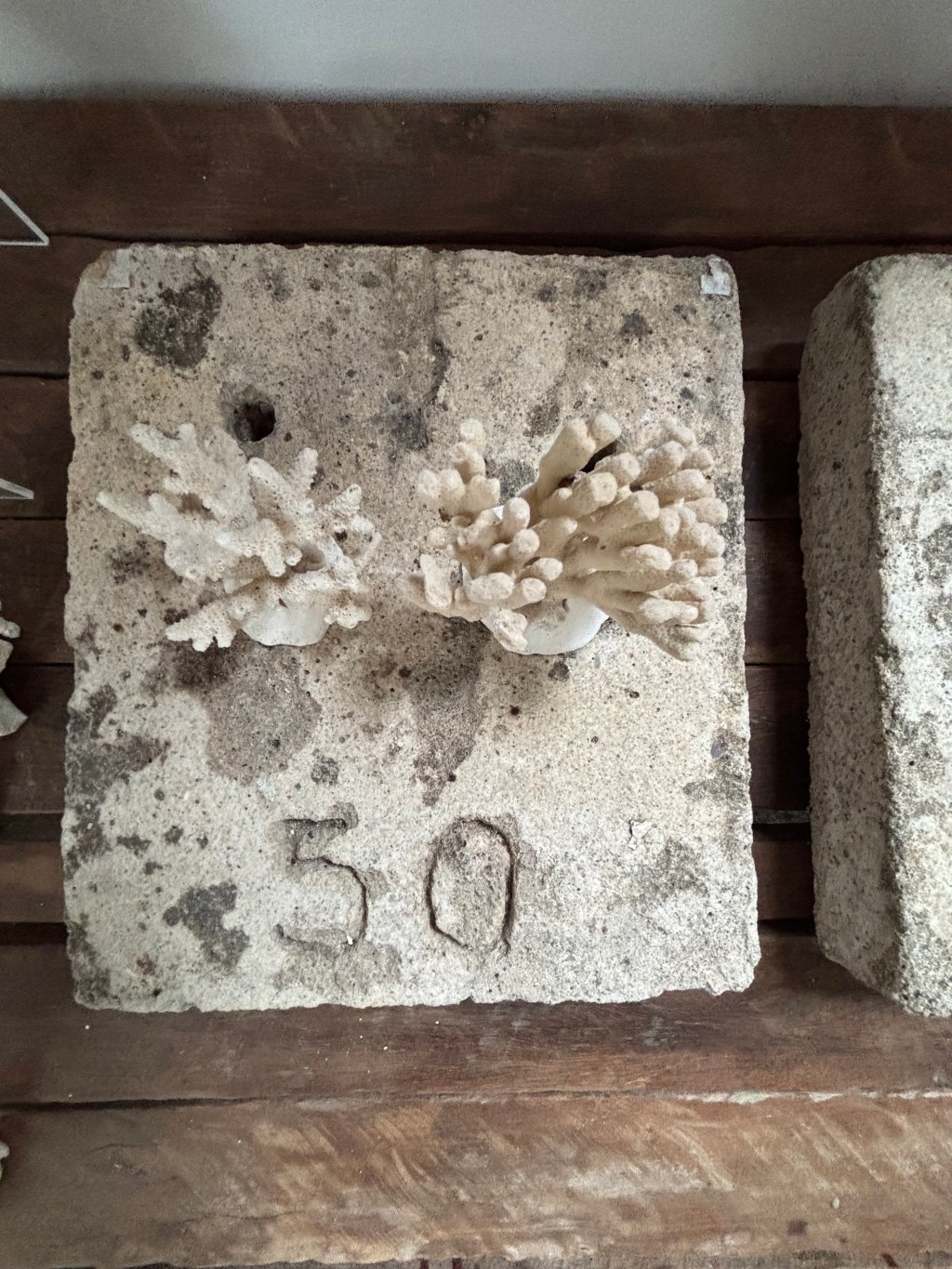
The collection review showed there were two object rich key stories: the Low Isles Lighthouse and the 1928-29 Great Barrier Reef Expedition. Armed with this knowledge and understanding that further work with Traditional Custodians was being undertaken by GBRMPA, I developed an exhibition proposal that concentrated on these themes. While both the stories were wonderful in their own right, it was the Great Barrier Reef Expedition that really caught my imagination. The museum holds 15 original cement tiles that were used in the early experiments. These original expedition artefacts, combined detailed research papers, diaries and photographs held in the Sir Charles Yonge Collection at JCU and at the National Library of Australia, gave me a great basis on which to start creating a display concept.

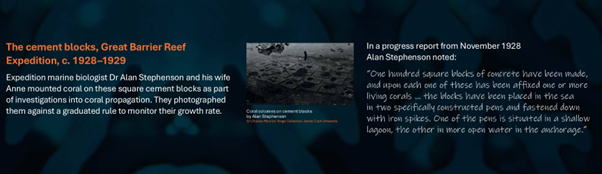
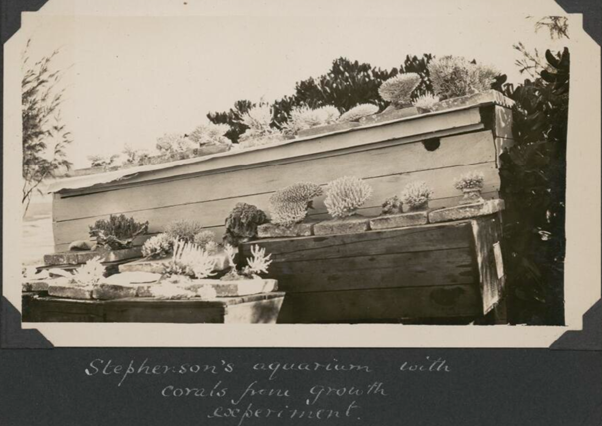

Thanks to research undertaken by previous scholars, the local historical society, as well as trawling through the original expedition papers, I was able to curate stories about the expedition scientists and showcase some of the extraordinary images from the expedition.
Transforming a tiny museum
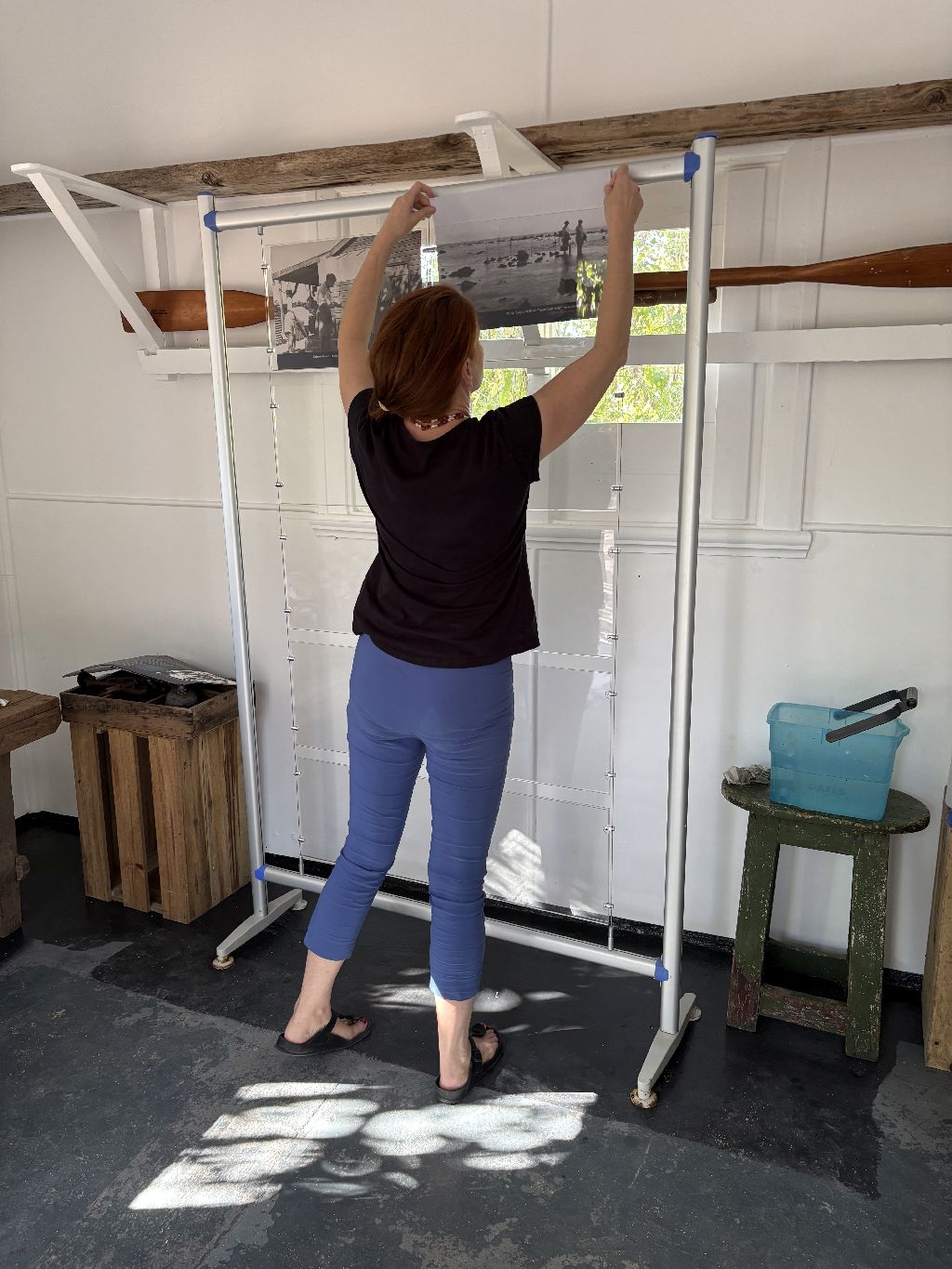
The tiny 1960s museum building presented the added challenge of being lined with asbestos walls. To address this, Ewen McPhee helped me assess the space, repurpose some domestic furniture, and work out how we could safely install the new panels. To save costs, we also chose to reuse the inhouse display stands, small crates and modified a timber table. Having a spatial understanding is a crucial part exhibition development, and only once this was done could I get cracking with developing the content. During this second stage of the project, Ren kept a close eye on each story, ensuring they were both accurate and relevant for museum visitors. I engaged Nettie O’Connell to assist with the larger didactics and designed the smaller works myself.
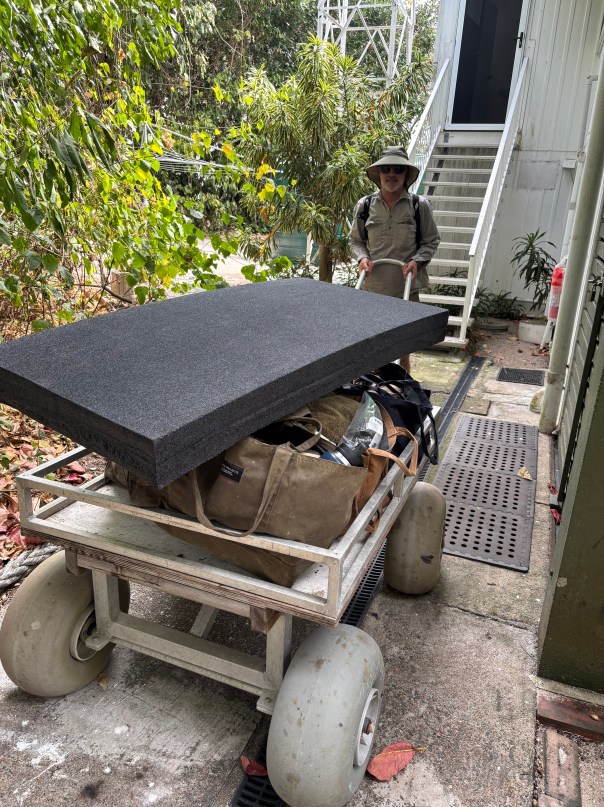
Once the panels were ready, Ewen and I returned to Low Isles to install the displays. We were grateful to the Quicksilver Wavedancer crew who helped us load equipment in Port Douglas. Armed with panels, tool kits, conservation materials, and food, the other boat passengers thought we were moving in for at least a month!
Installations take time and require onsite flexibility. Ewen and Col worked wonders by finding creative solutions to display challenges. We were able to safely house the original cement tiles, securely display the early lighthouse keepers telescope, remount some of the old signage, and draw up modifications to allow other valuable items to go on display.

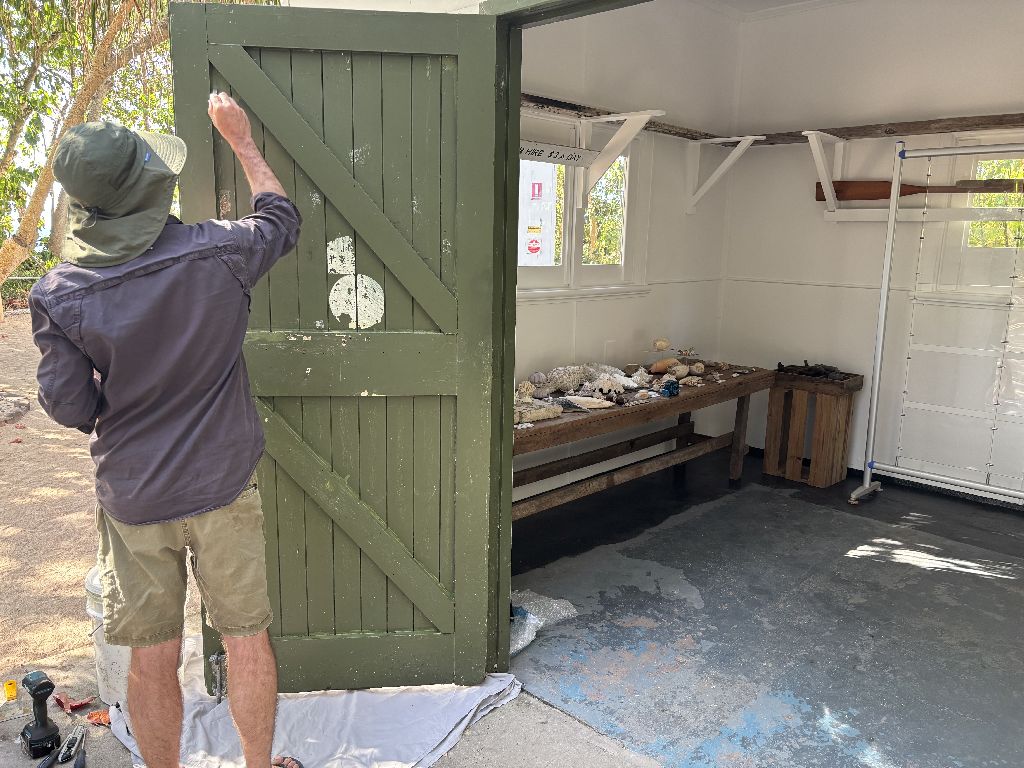
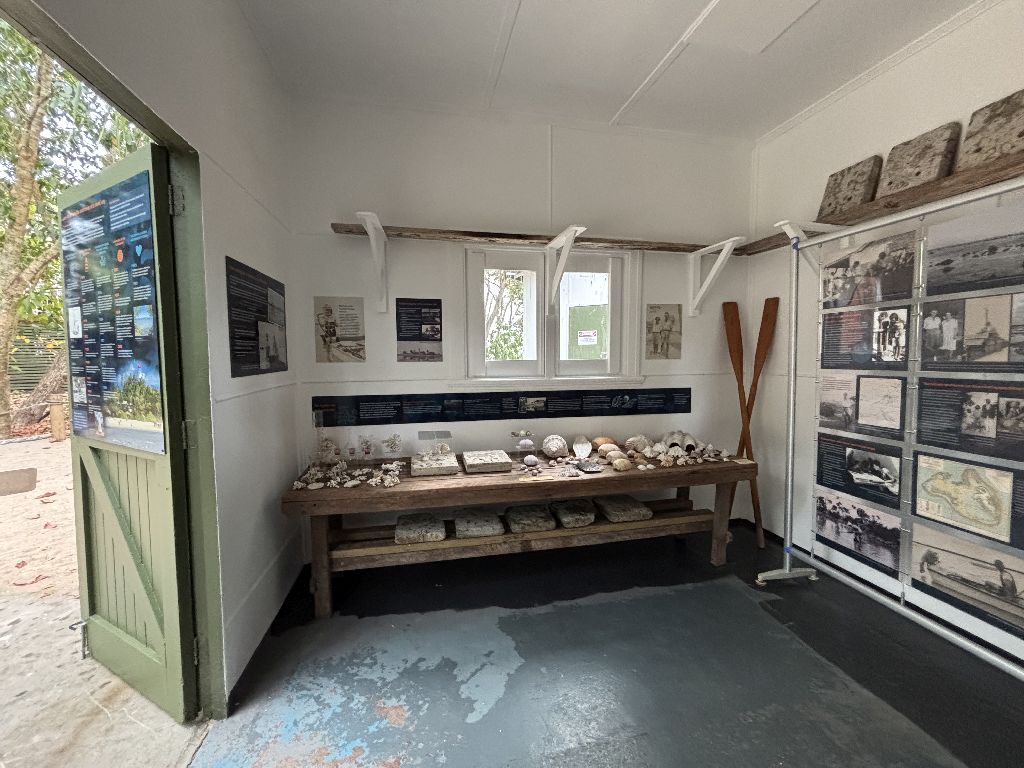


The final product is a fresh, repurposed space that focuses on a few key stories, showcases historic images, preserves some of the precious items in the collection, and encourages visitors to learn about Low Isles as a place of history, culture, biodiversity and wonder. All I need now is another building so I can explore more stories about the life and times of this fascinating part of the Great Barrier Reef.
Thanks to Quicksilver Cruises (Wavedancer) for facilitating our transfers from Port Douglas, and to GBRMPA and LIPS for supporting our work on the project.

 Queensland Museum & Community Collections
Leave a reply to magnetictotallye40a9c60bd Cancel reply