


After finishing the collection preservation work on the Vera Scarth-Johnson collection last year, I’ve spent part of the last six months researching, curating and developing a new exhibition for the gallery at Nature’s Powerhouse in Cooktown Botanic Gardens. I’ve been lucky to work with the skillful Michael Marzik (designer and installation wizard), the talented Jamie Clark (graphic design magician), and spurred on by passionate VSJ volunteers (who’ve been desperate for the gallery to get a facelift).
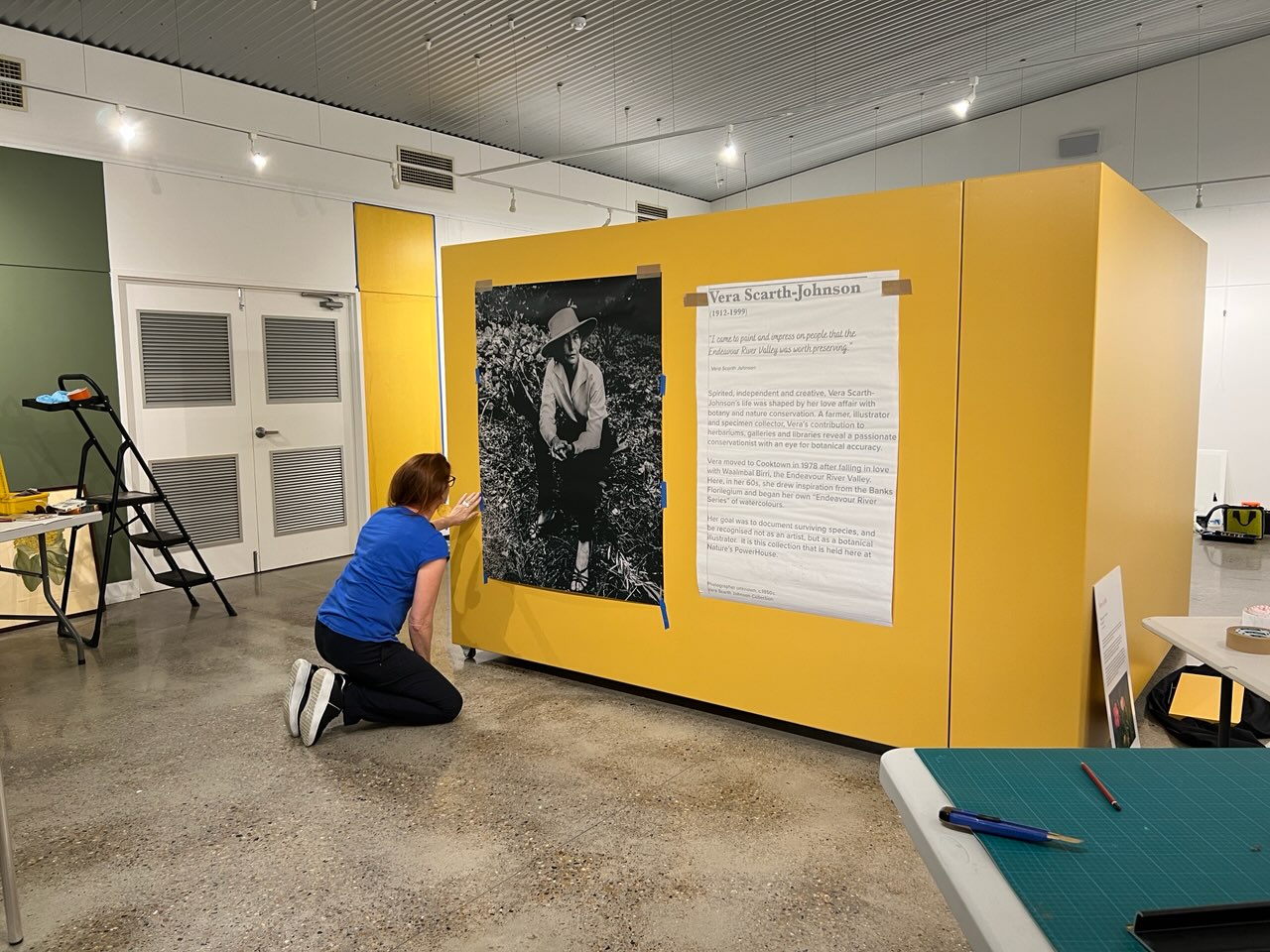
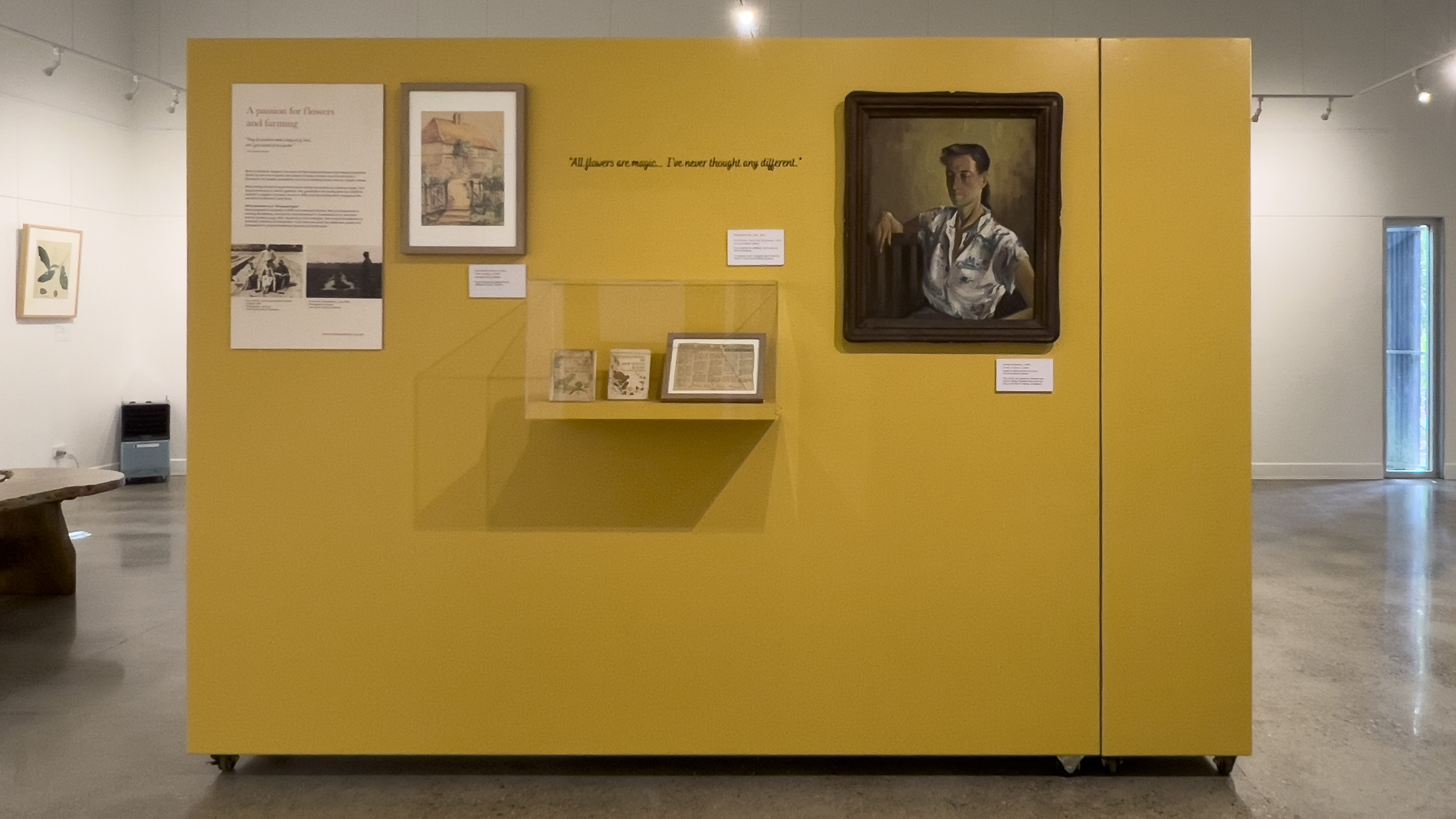
The VSJ Association gave me the task of bringing more of Vera’s story into the gallery. Talk about a gift! Vera’s energy almost leaps out of the letters and archives as you start researching her life. Early photos and portraits are mesmerizing, and I’ve not met anyone yet who has not been taken by this striking portrait of Vera. At times I think you can almost hear her speaking as you read about her love for flowers, botany and her passion for environmental protection. I wish I had met her!
I find it ironic, in many ways, that this ‘loudness’ is tempered by the delicacy of Vera’s botanic illustrations. As a curator, therefore, I wanted visitors to know that behind the gentle, loving observations of specimens and wildflowers that are captured in her illustrations, was a larger-than-life character, and a woman with a mission!
Creating a curatorial vision, layout and identity
To help visitors make sense of the works they were seeing, provide them with historical context and draw on the collection, we divided the gallery into four main sections.
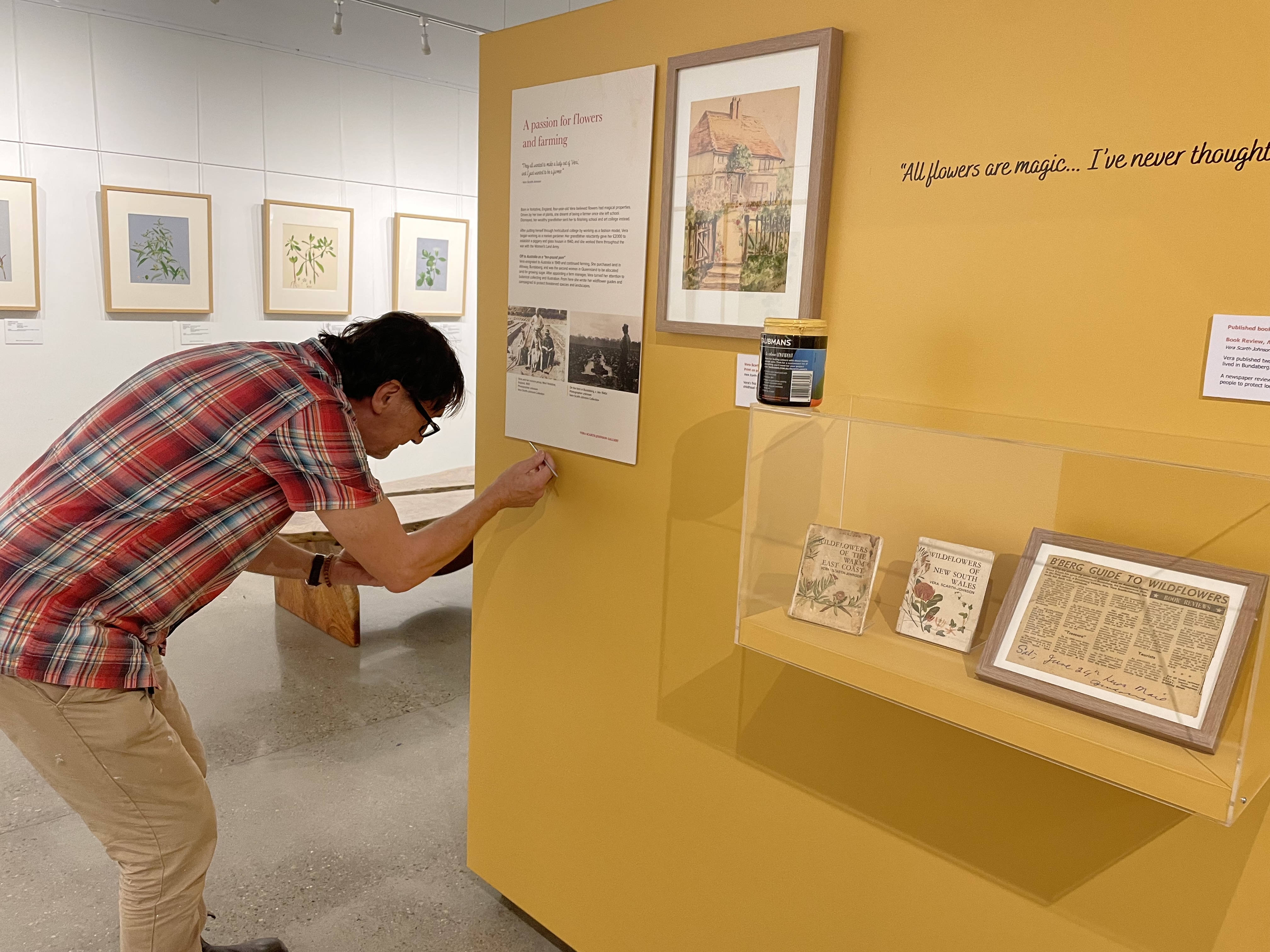
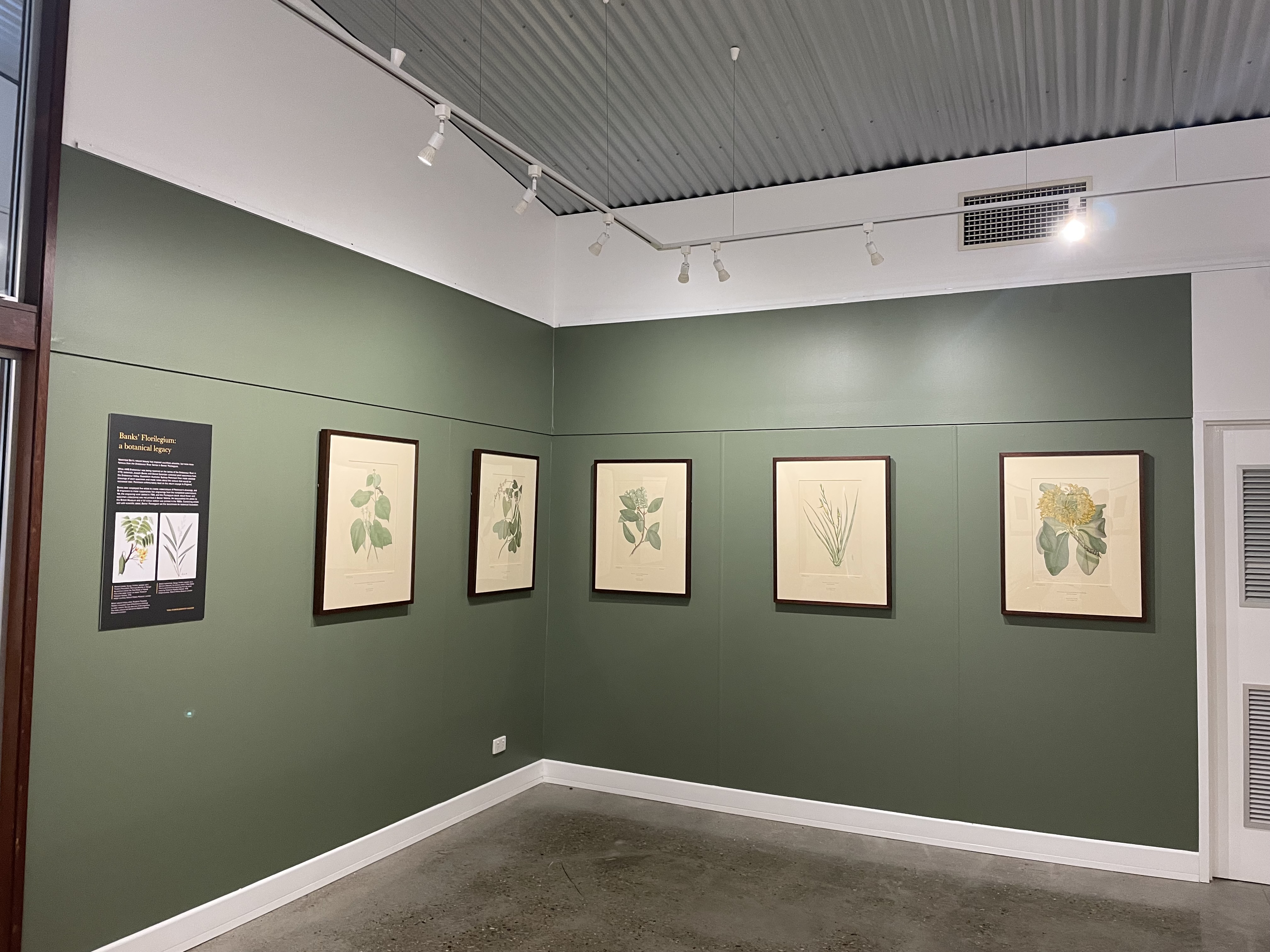
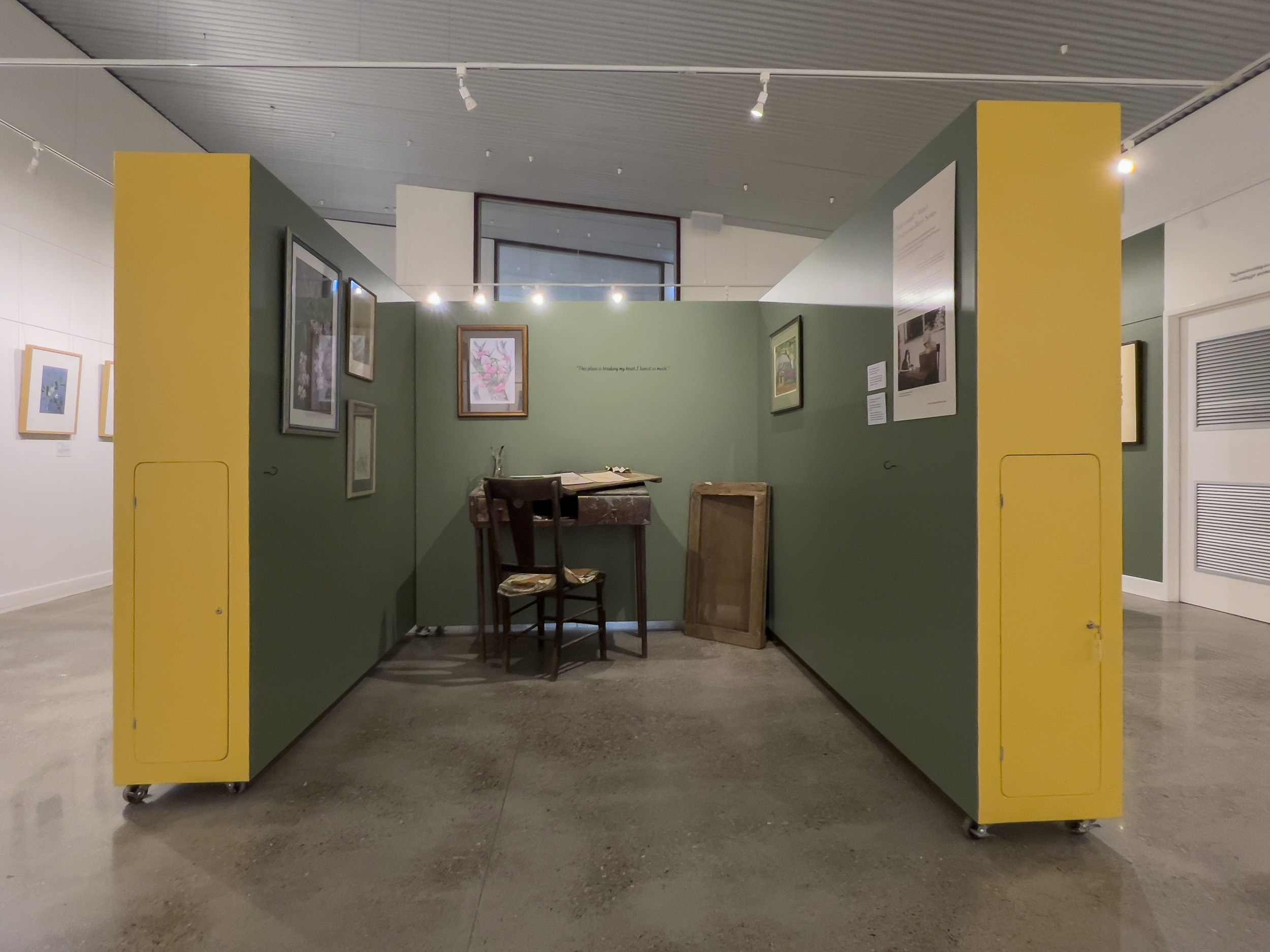
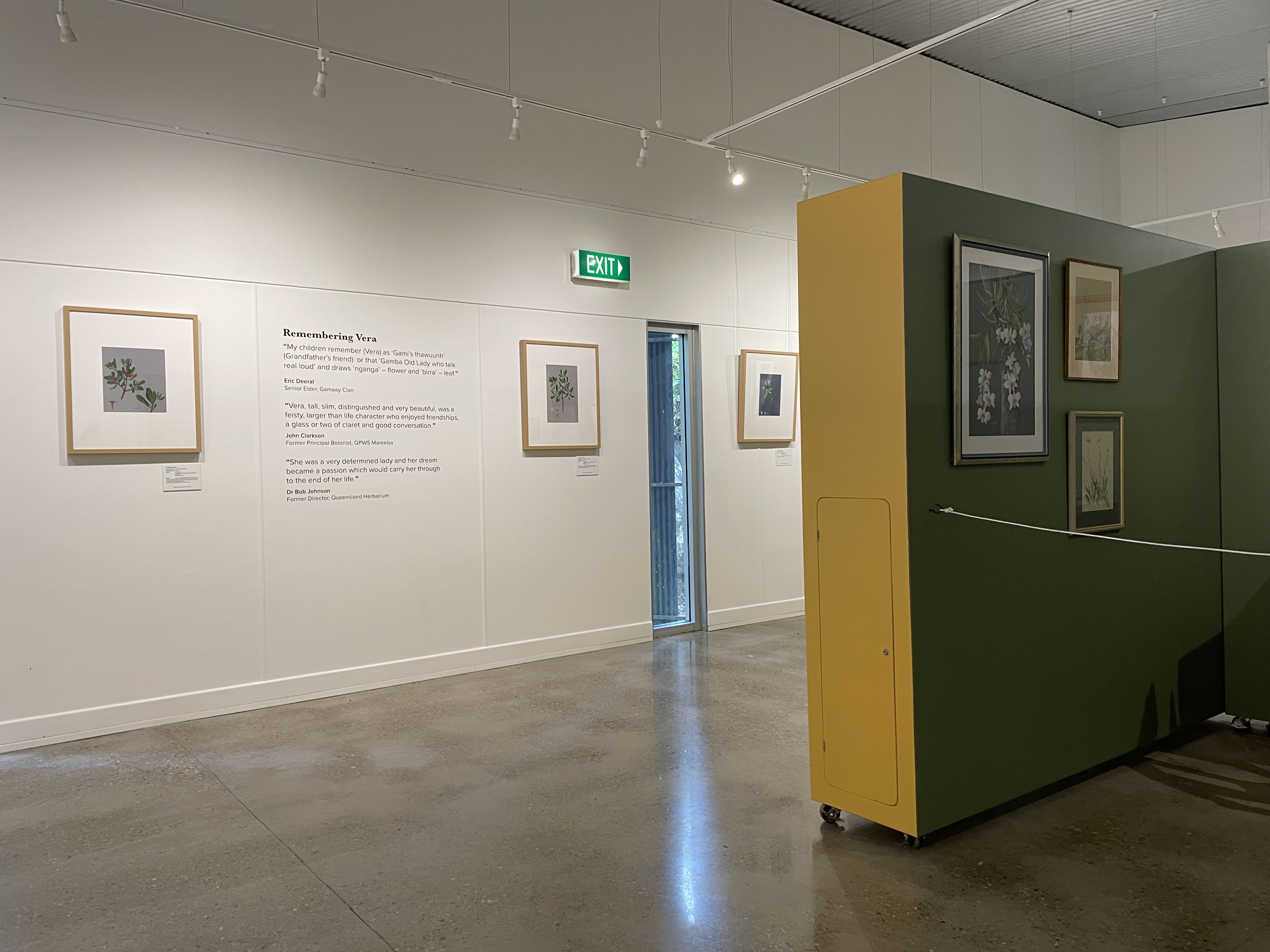
As I worked on the concept and content, Michael developed a layout scheme. Like many MDO projects, the small production budget meant creative reuse of existing furniture and materials. Michael reconfigured three moveable walls to create a central pod which would contain Vera’s life story. To bring life and energy into the ‘white box’, he then created a colour scheme for the gallery walls. Taking inspiration from the artworks, a formal olive green to create definition behind the Florilegium, and a golden mustard to highlight references to Vera.
Once I’d developed the content, we engaged Jamie Clark to create the visual identity and style for the signage, text panels and labels. He used design elements from Vera’s illustrations and handwriting, and helped bring cohesion into the display.
All work was approved by volunteers and community and run through the Cook Shire Council. Thanks go out to Barb and Sally for a brilliant edit and proofread!
Michael and I did a bit of flexible curating and redesign during the installation to cater for some of the delayed building works, and challenges with vinyl lettering.
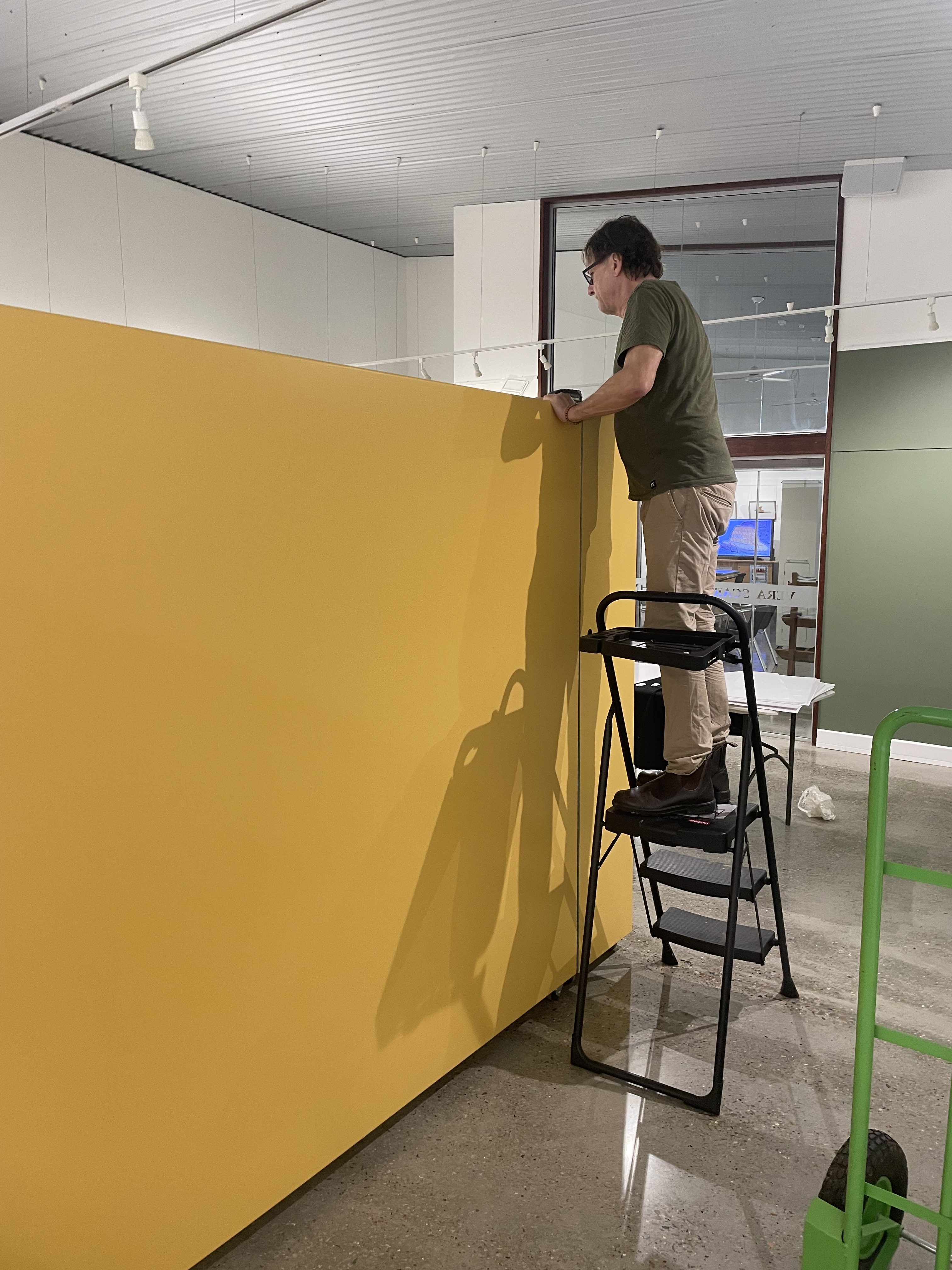
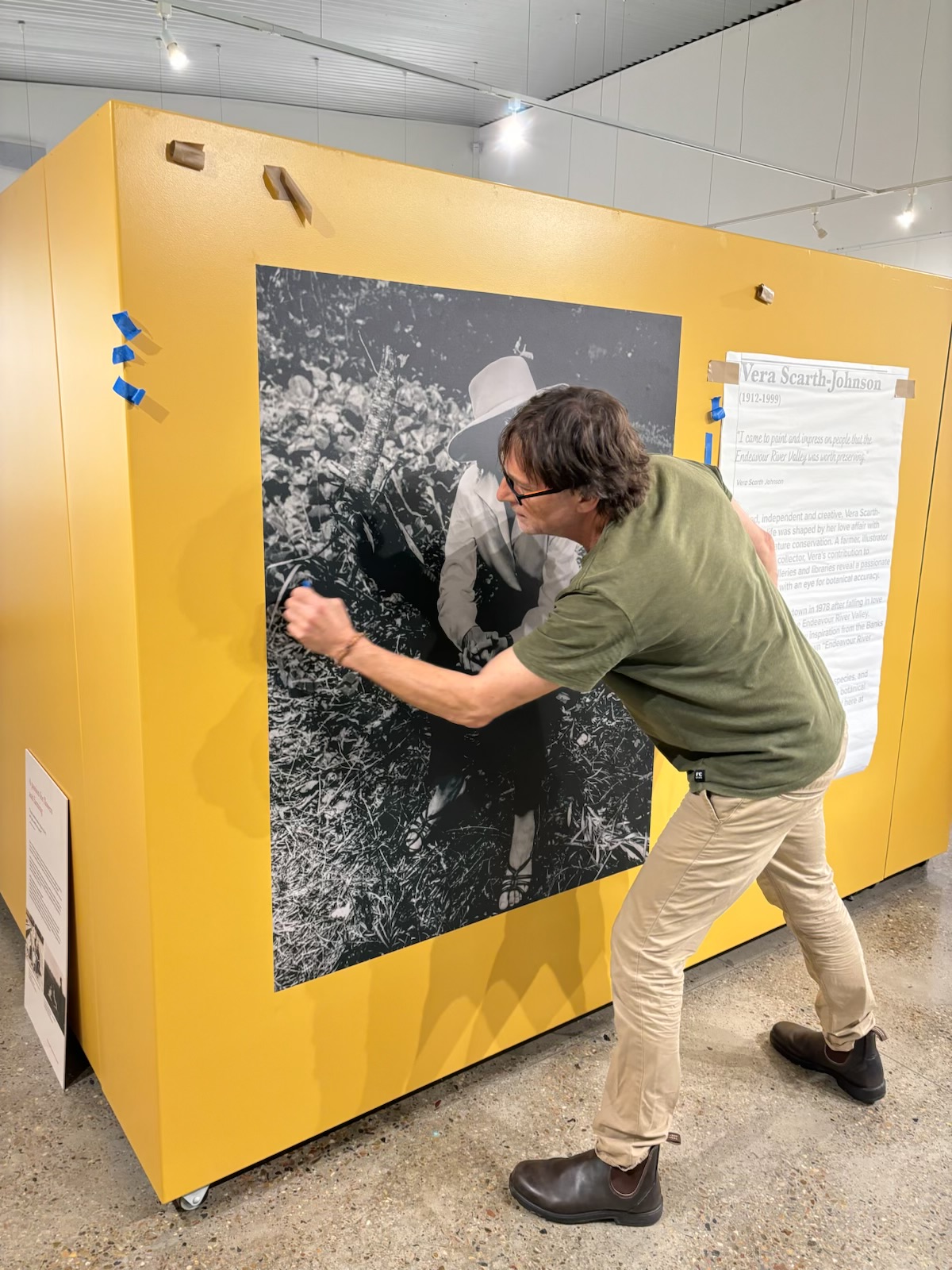
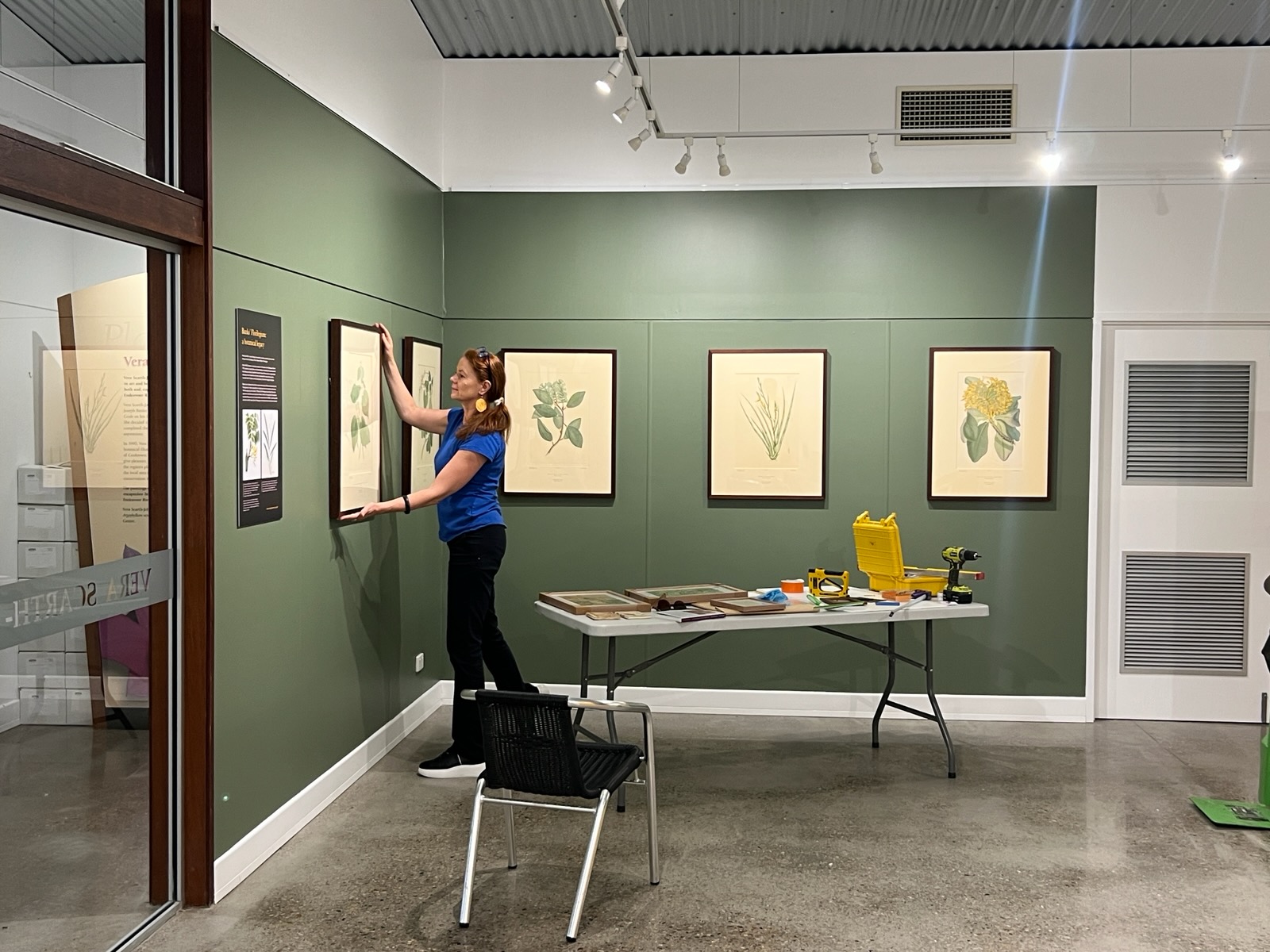

The end result
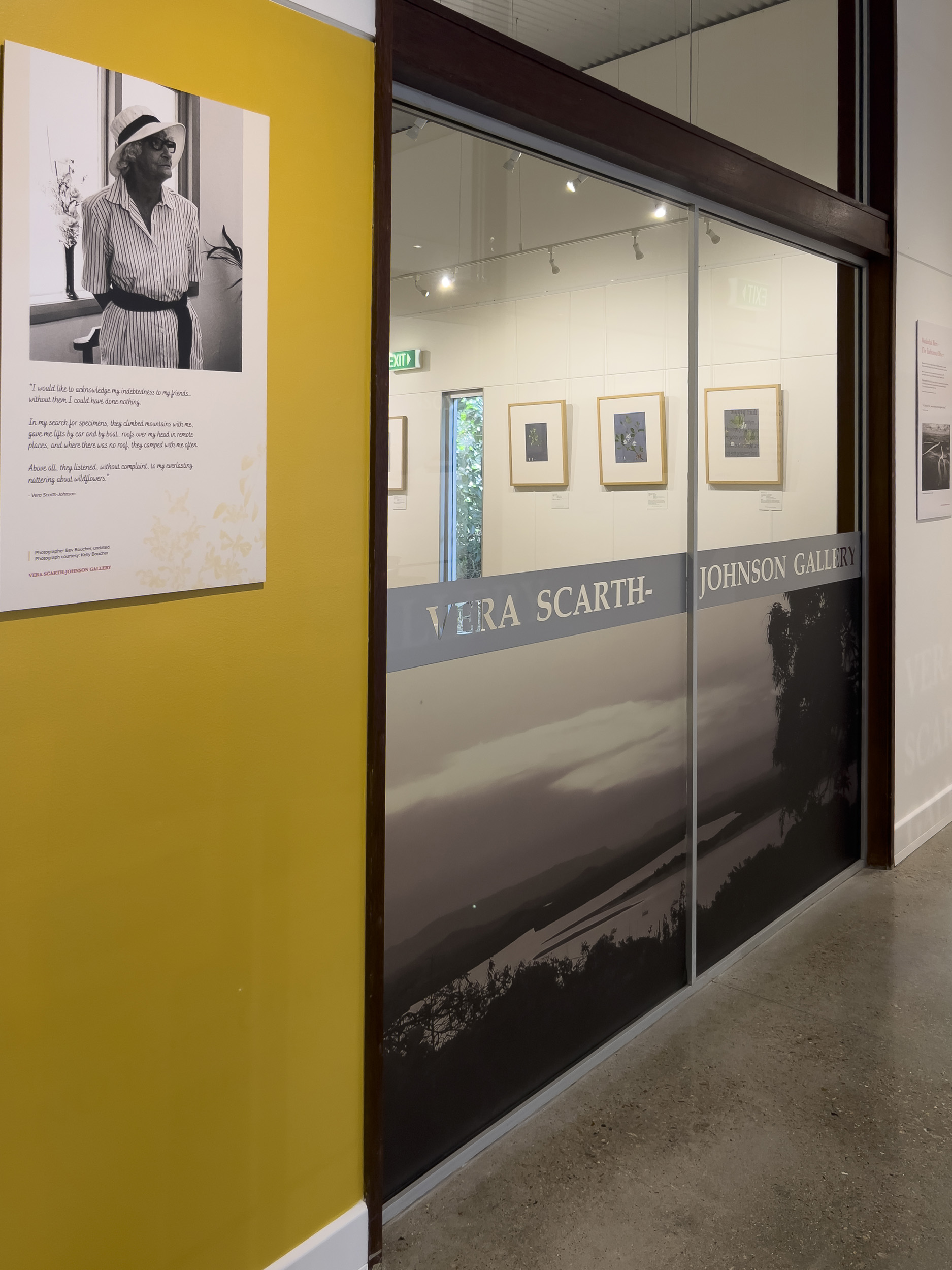
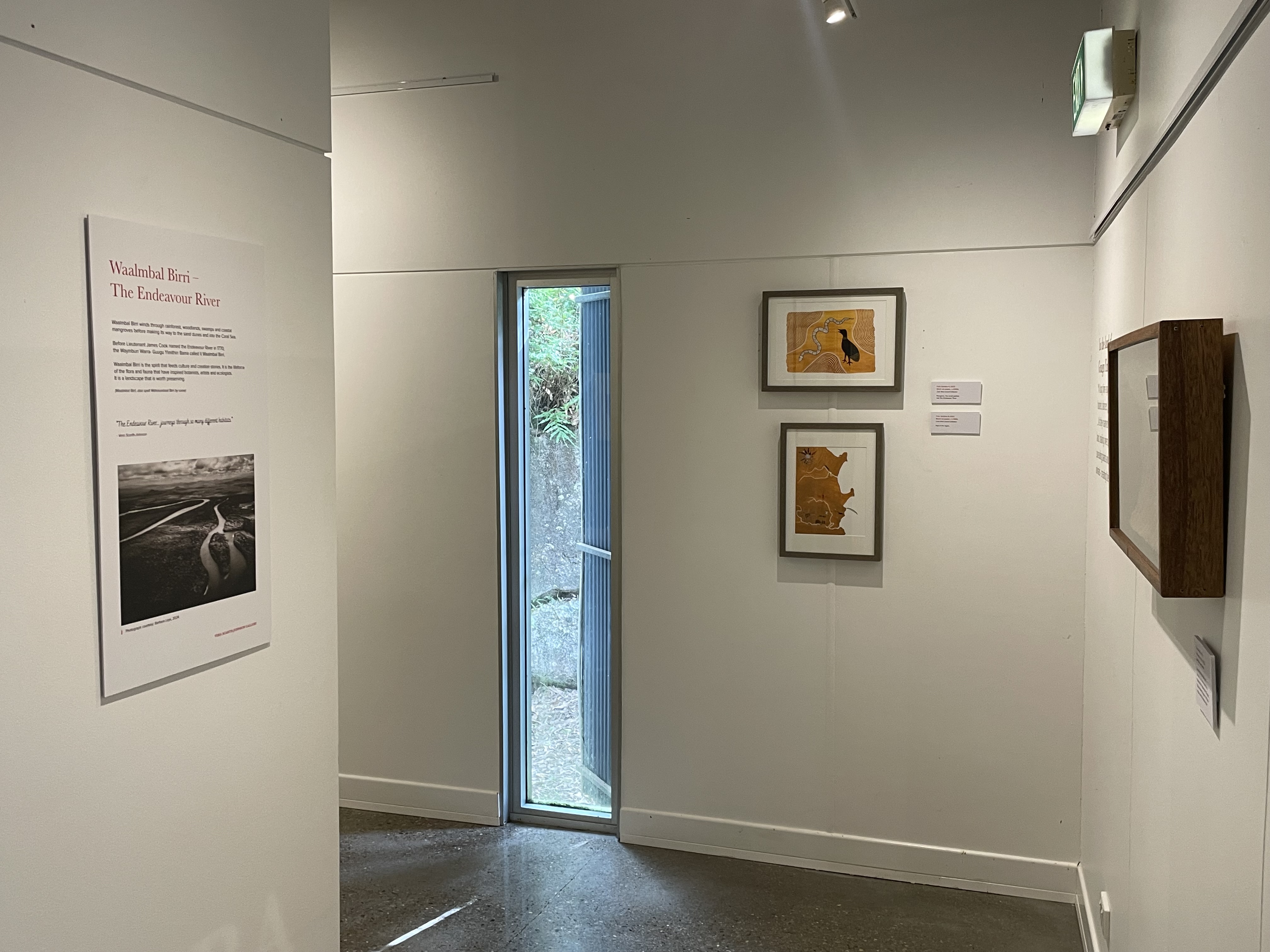
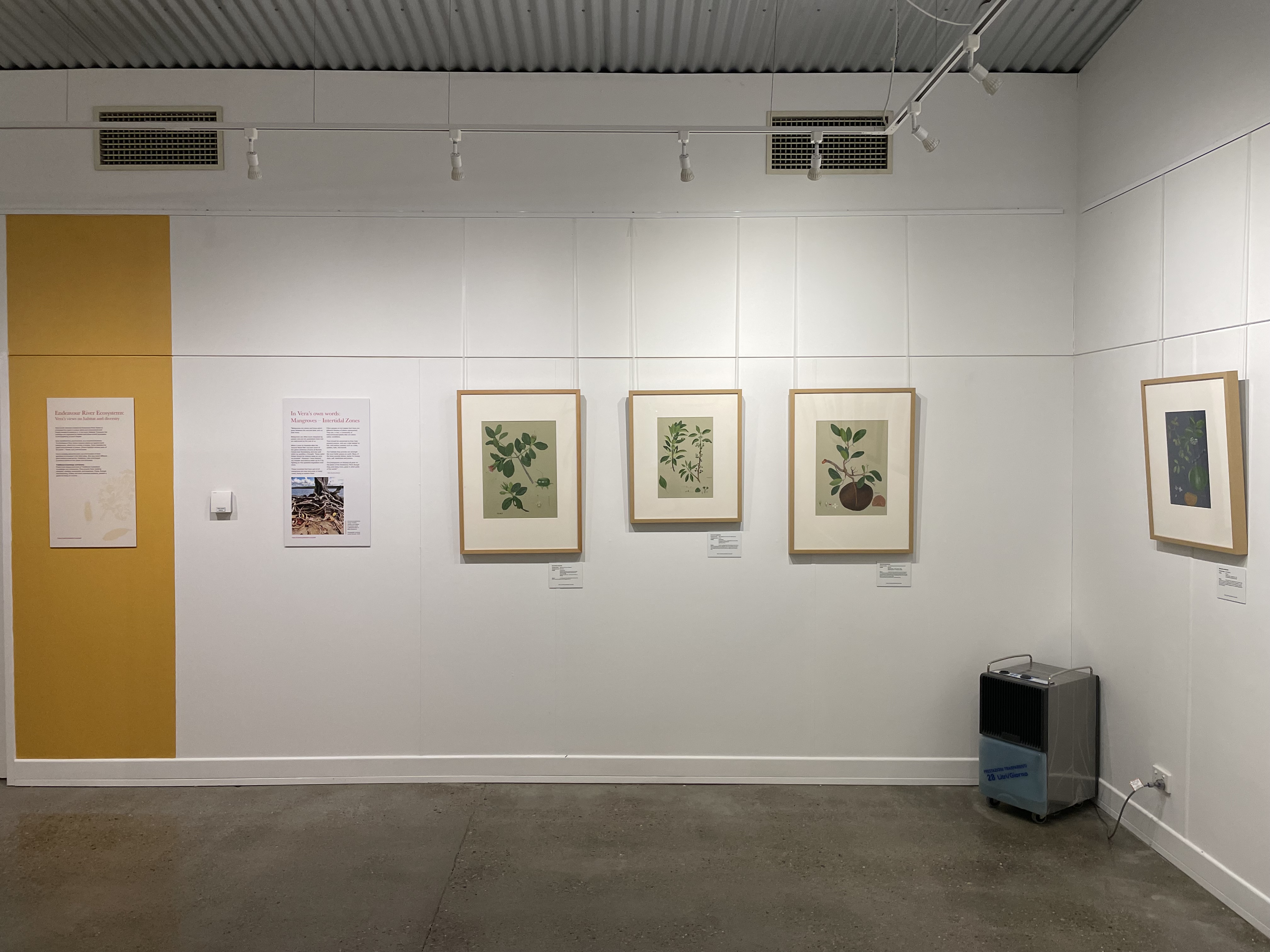
The entry area focuses on Waalmbal Birri – the Endeavour River. This is the landscape that has inspired all the work in the gallery. It is part of Guugu Yimithirr country and culture. It also draws on the work and storytelling of respected Senior Elder, Tulo Gordon.

The second section showcases illustrations created by Joseph Banks and Daniel Solander, and which later became engravings that were part of Bank’s Florilegium. The reproductions on display were printed from the engravings. Vera used the Florilegium as the inspiration for her own Endeavour River Series of illustrations, which are the basis of the collection held at the gallery.
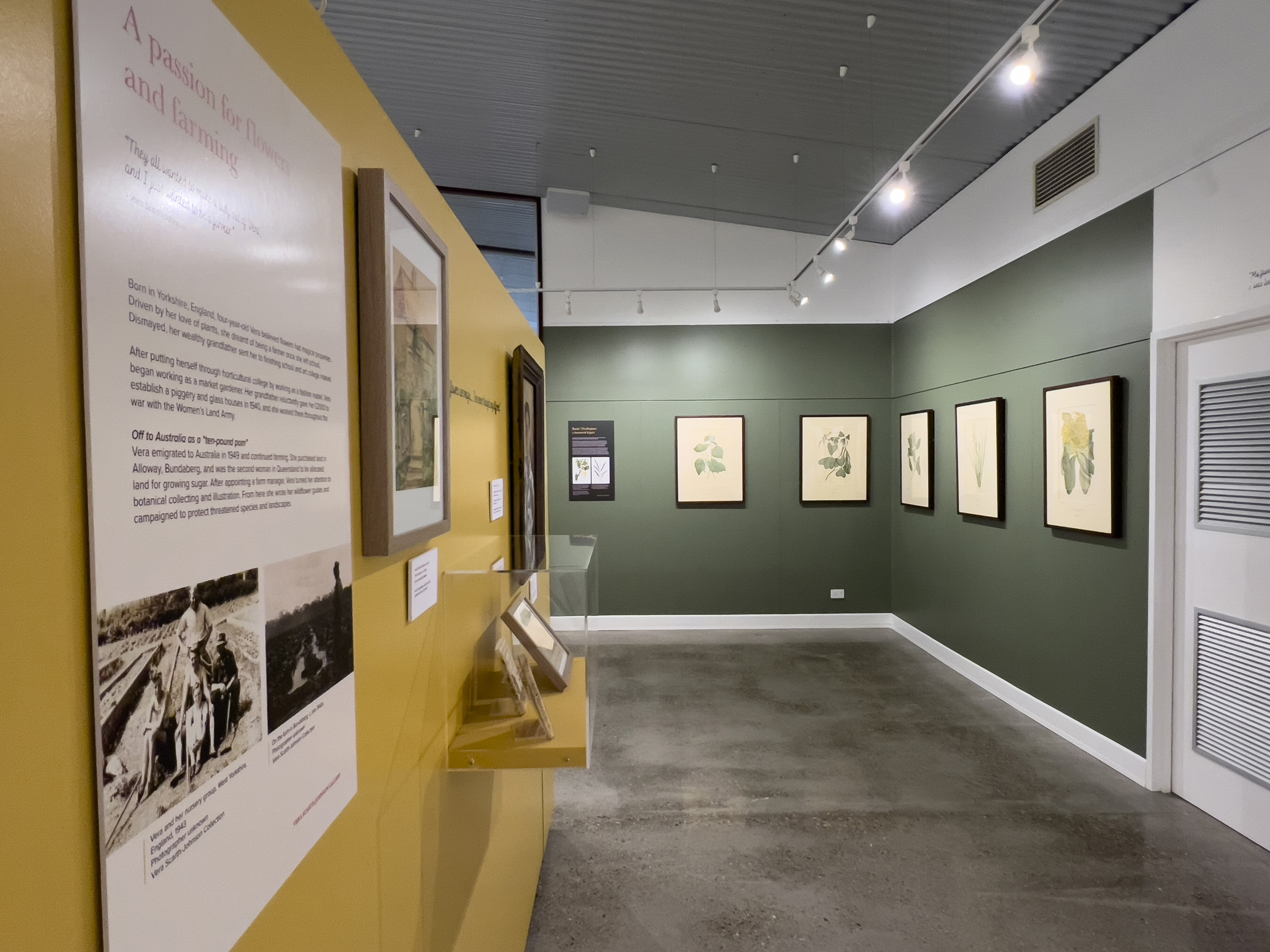
Vera’s remarkable life is integrated into a third section. It reveals her early life and inspirations, her interest in farming, her migration to Australia, and her passion for botany and conservation. I was delighted to include a portrait of Vera by George Goobanko, a Ukranian migrant to Bundaberg, and copies of her wildflower publications. We also made sure her painting desk, chair, flower press, specimen labels and awards were part of the display.
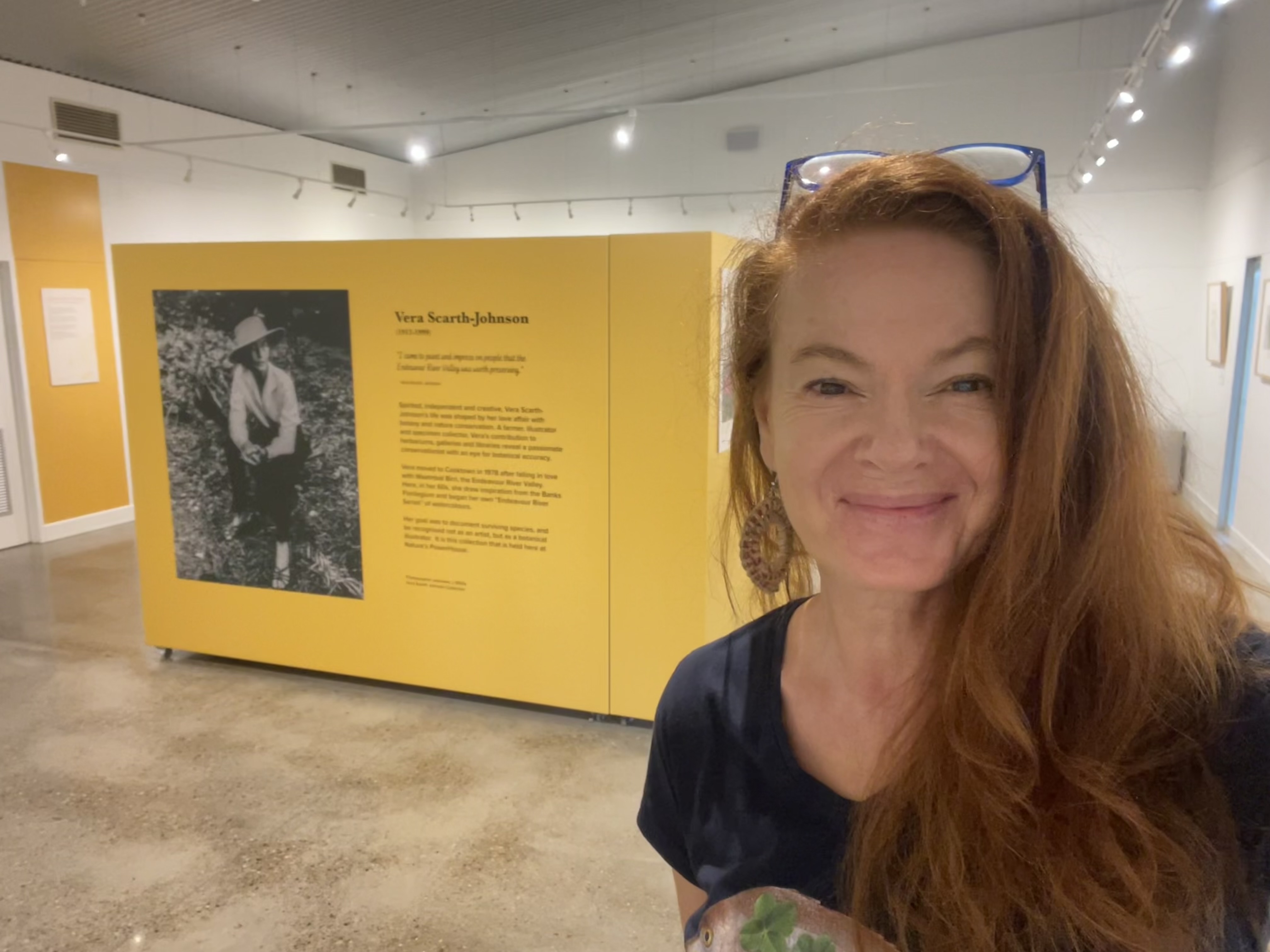
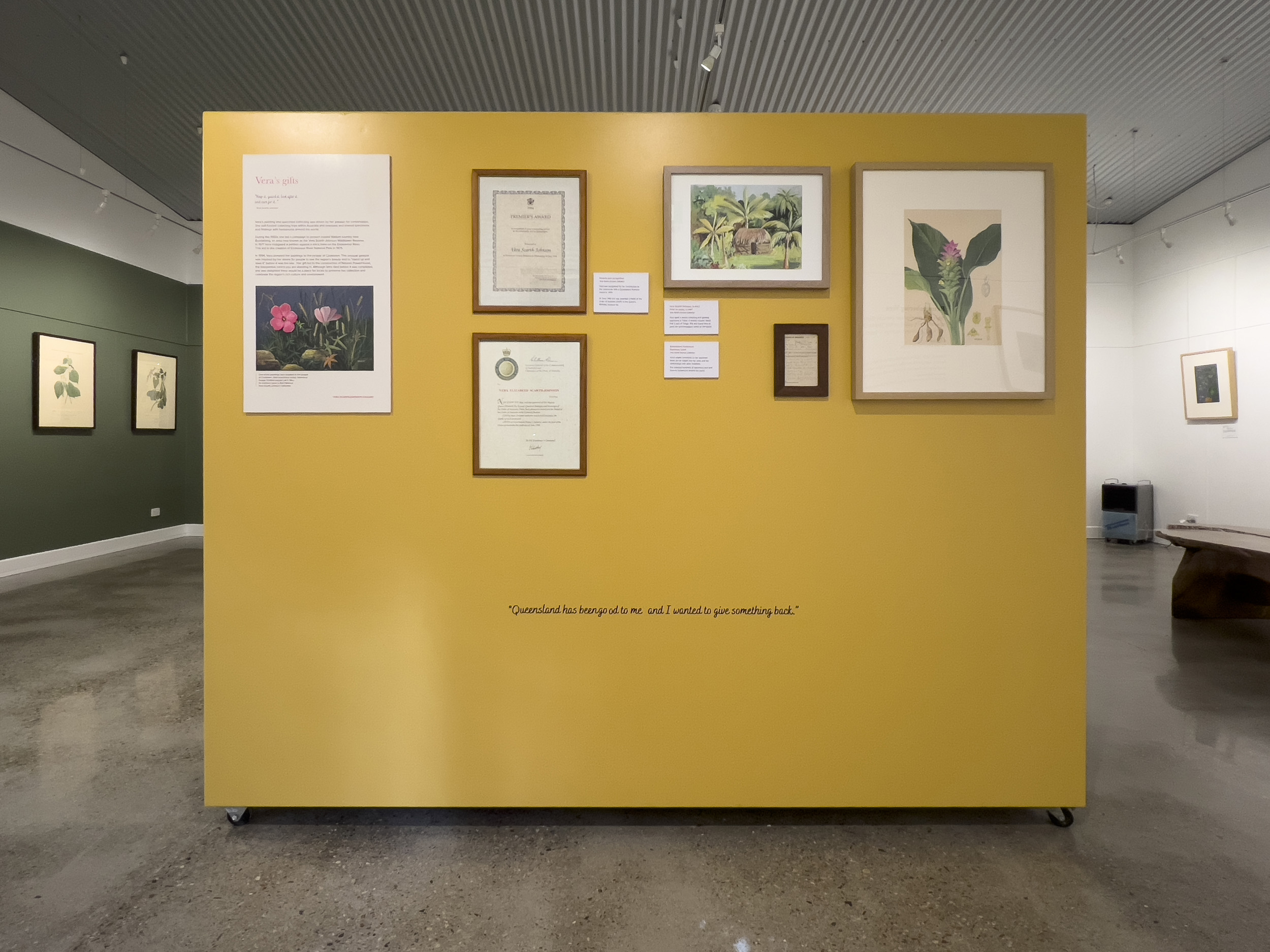
Finally, a fourth, temporary gallery section ensures volunteers can continue to curate displays in the gallery. It includes some quotes from people who fondly remember Vera’s determination and drive. Although smaller than the original space, it allows the collection to ‘rest’ and means that volunteers have a more achievable framework for the development and installation of temporary shows.
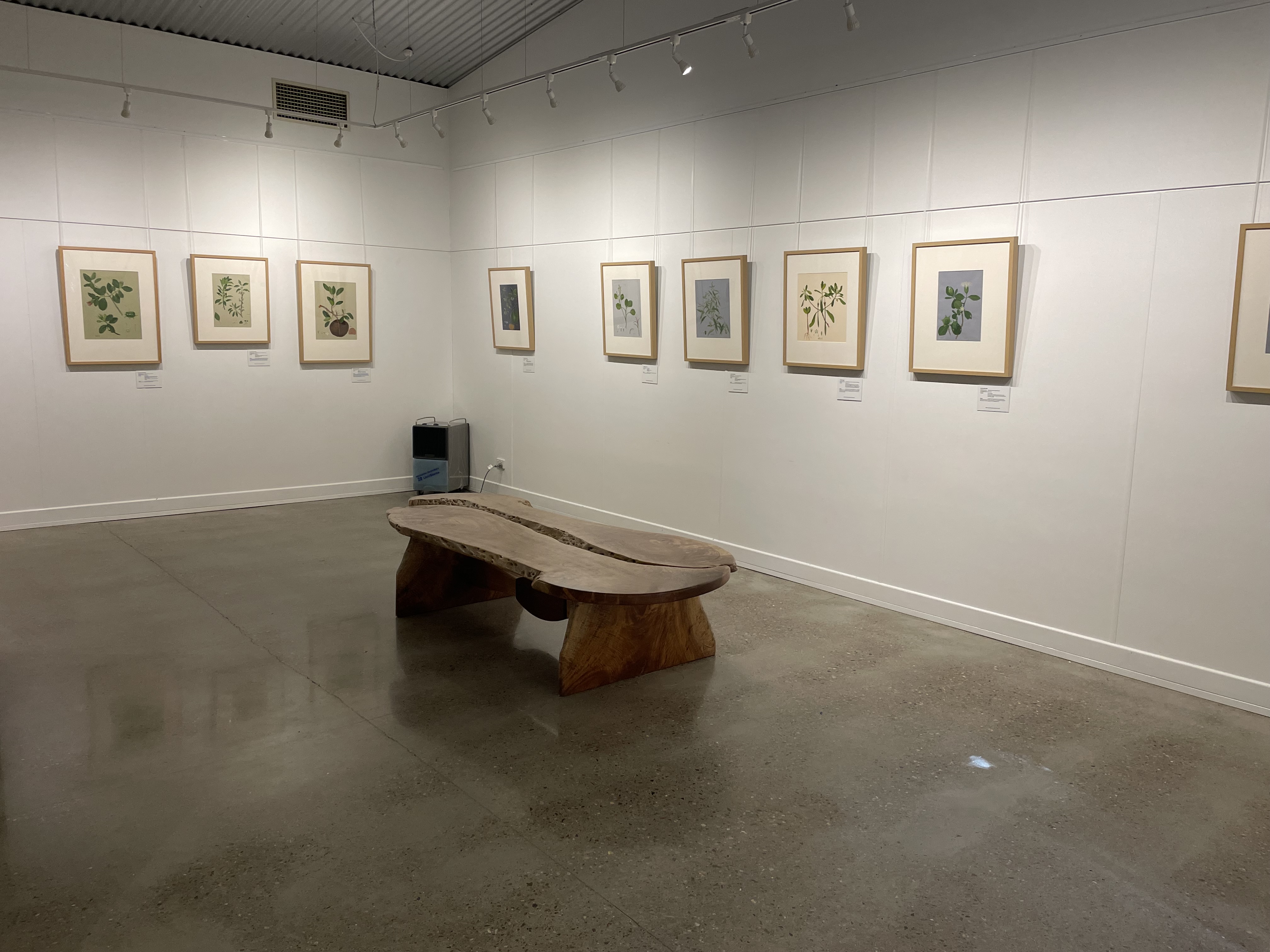
It was a pleasure helping the Vera Scarth-Johnson volunteers work on both the collection and the gallery renewal. We hope they are delighted with the transformation and the improved collection management.


 Queensland Museum & Community Collections
Leave a reply to Elizabeth Atkins Cancel reply