
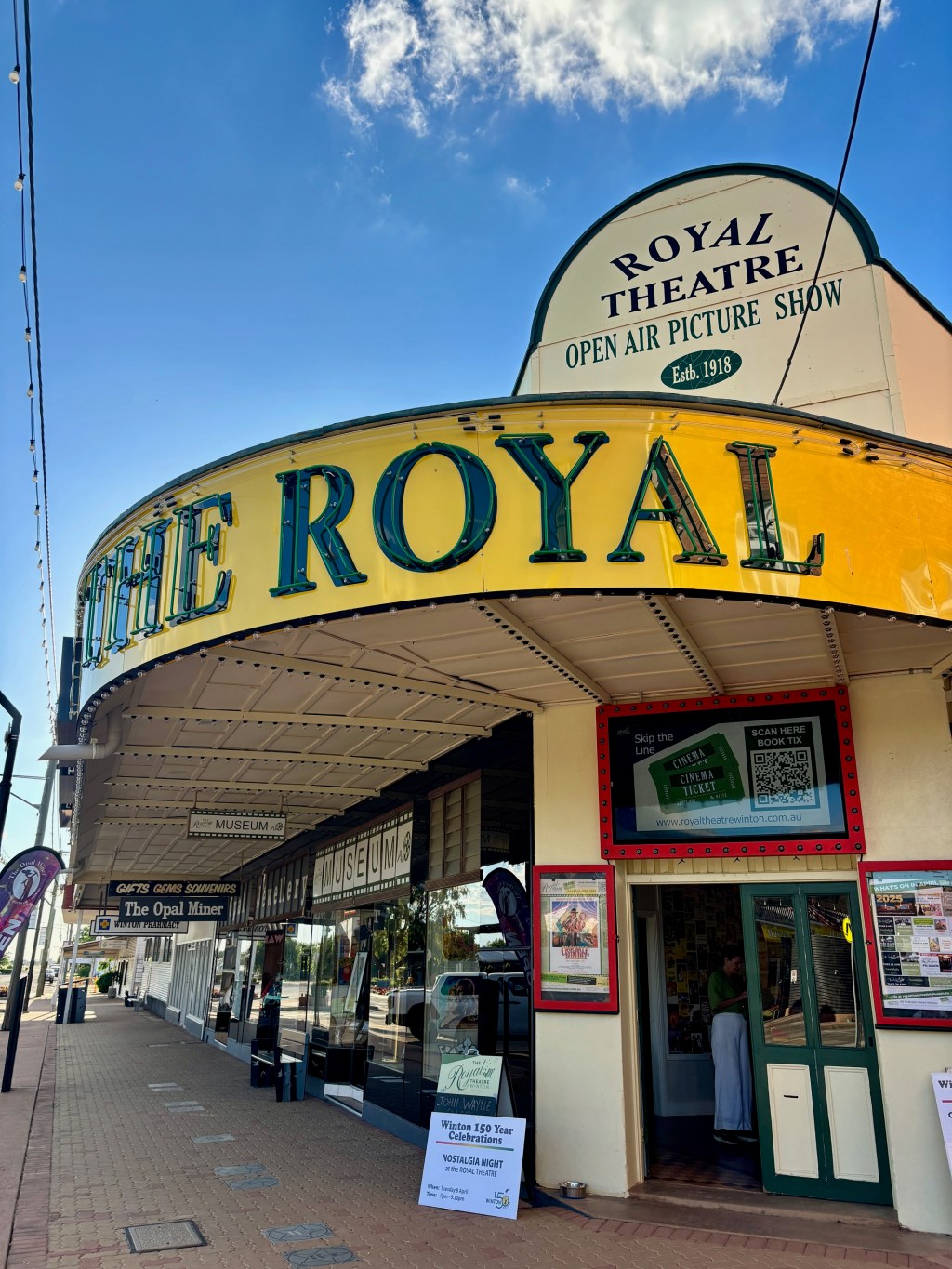
The Royal Mail Hotel opened on Elderslie Street in Winton in 1878. Today, the location is home to Winton’s Royal Open-Air Theatre. The building’s journey from then until now is one entwined with reinvention and resilience.
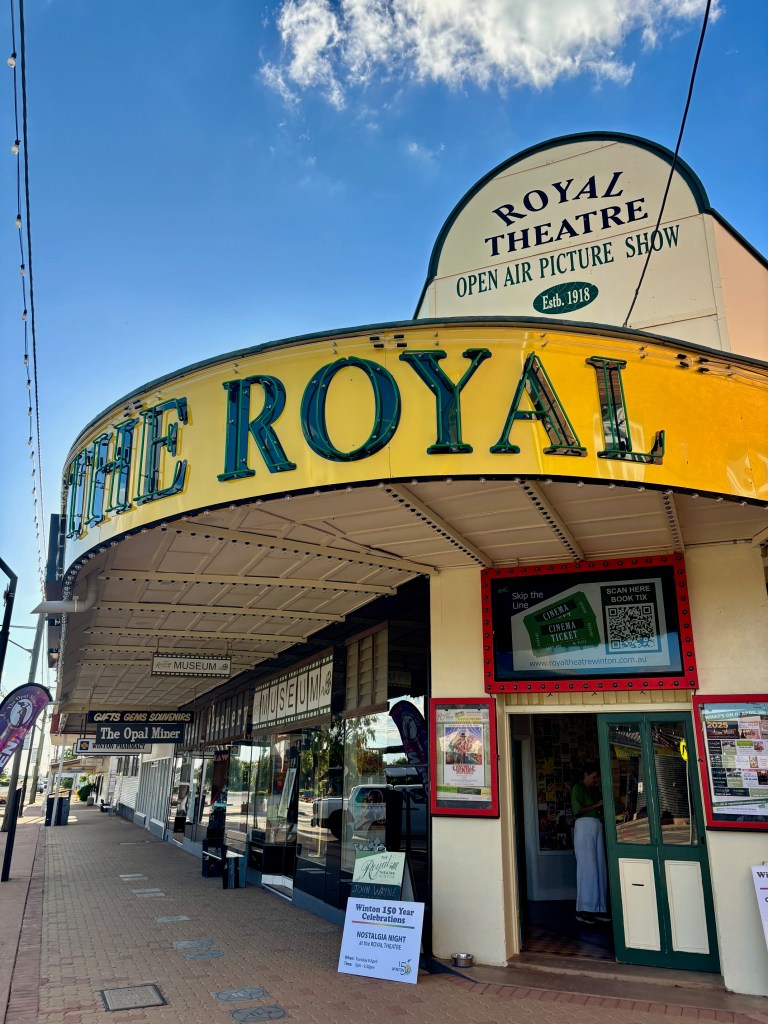
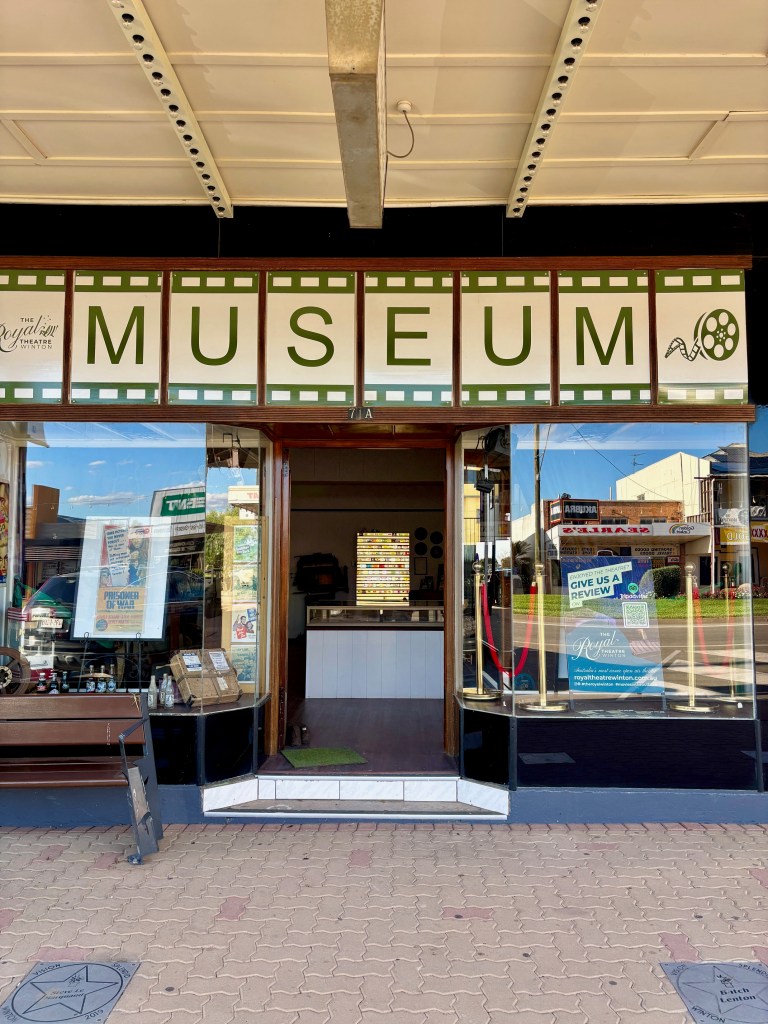
The theatre is managed by Winton Movies Inc, a not-for-profit entity who run the operation and interpretation of the venue. The group was established to promote film and cultural experiences for locals and visitors to the Winton community. Alongside their team, I recently curated and installed a new interpretive display at the theatre. The display guides visitors through the venue, sharing both the unique history of the building itself and an insight into the experience of cinema in outback Queensland. Geraldine Coughlan, one of the members of Winton Movies Inc and member of the Evert family, provided the historical information and images for the display, and together we compiled the stories of the theatre.
The display starts in the theatre’s museum space, which features objects used throughout the theatre’s lifetime – film reels, picture slides, reserved seating charts, and old ticket stubs.

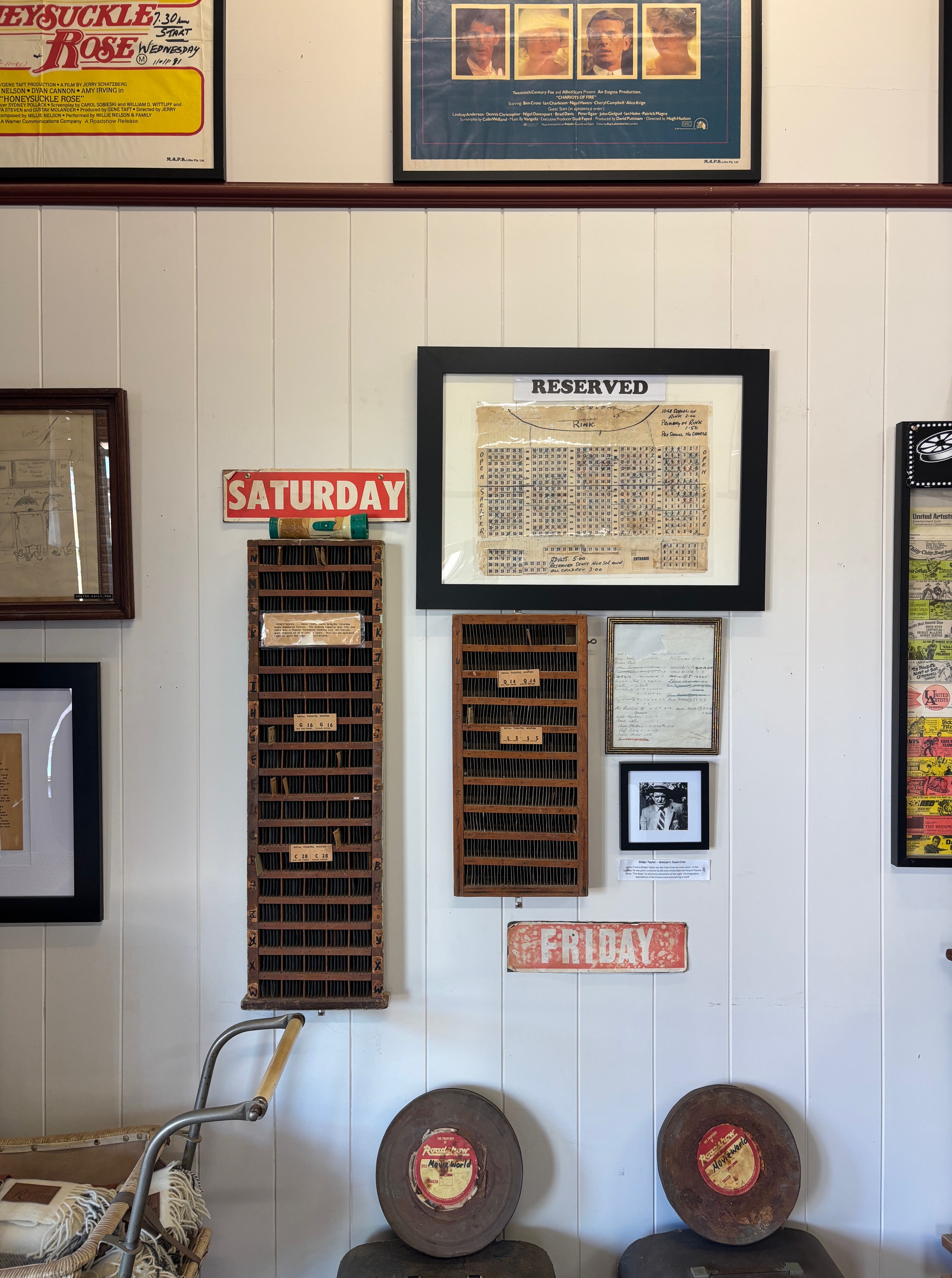

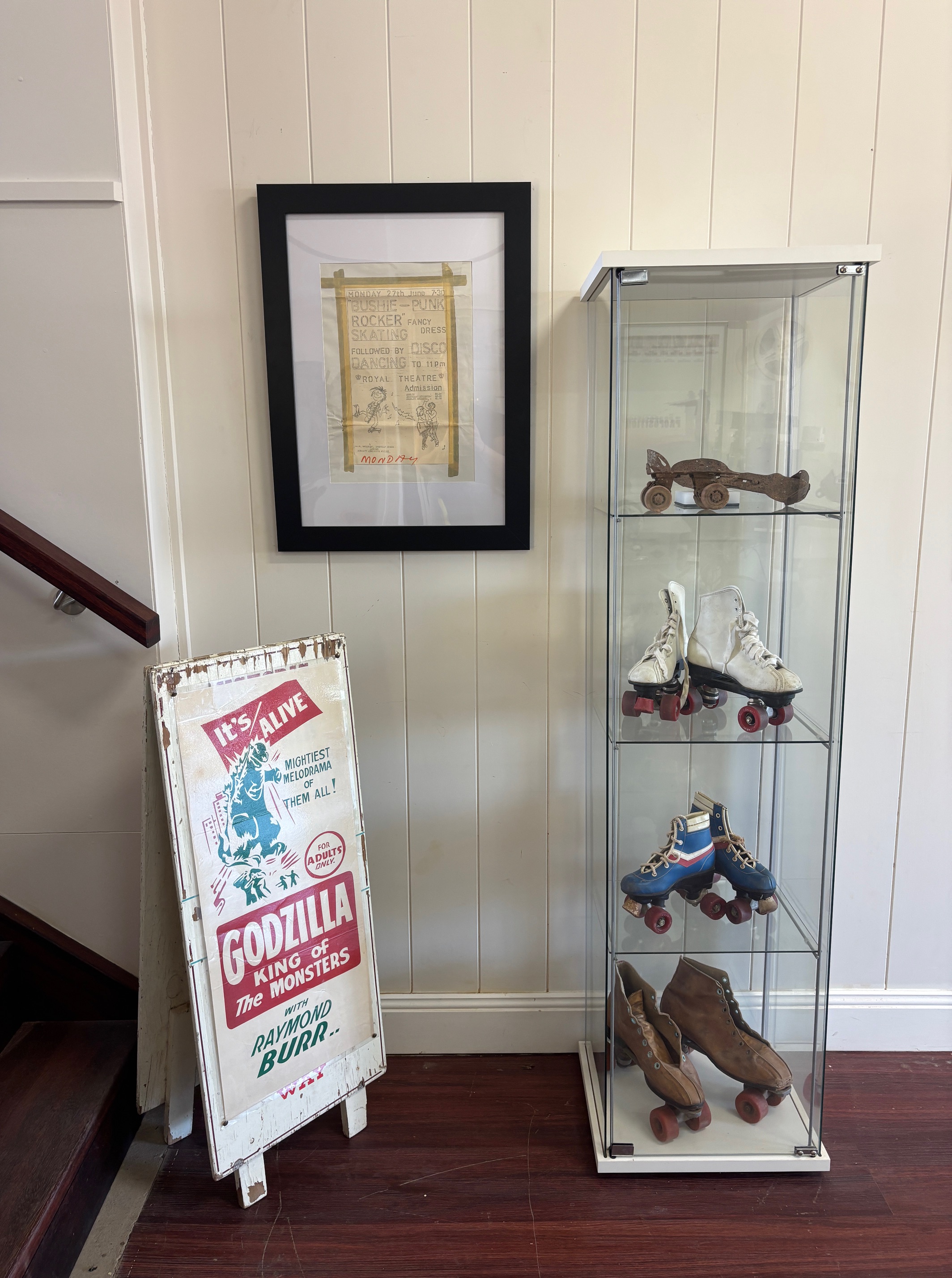

The display takes visitors through the early years of the theatre, telling how only years into its use as a picture theatre, the building was damaged by a fire in the operating room – a precursor to a later, more catastrophic fire that destroyed the theatre, hotel, and several surrounding buildings.

Despite the extent of the damage, and driven by the efforts of proprietor Bill Evert, the theatre was rebuilt and reopened in 1938. The revamped theatre prospered, holding film nights, skating events and competitions, boxing matches, dances and fetes all in the open-air complex.


The war years
In the display, we chose to explore the impact of WWII on the regional town of Winton, and how the theatre became a place where patrons could both learn about the war efforts offshore, and escape the daily worries of conflict. Bill Evert shared his space with the Winton sub-branch of the Returned Sailor’s, Solder’s, and Airmen’s Imperial League of Australia (RSSAILA) and leased the theatre’s retail space to the Army to be used for admin and storage purposes. He was later recognised for his contributions to the war effort by the Commonwealth Government and presented with a Certificate of Acknowledgement.

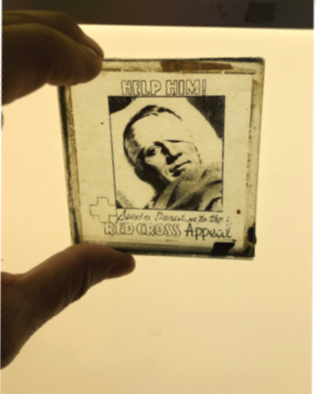
The display continues on, sharing insights into the introduction of Talkies in 1930, the arrival of VHS and commercial television and its impacts on theatre entertainment, the introduction of ‘Nostalgia Nights’ at the theatre by then proprietor Vince Evert in the 1990s, and the ongoing legacy of the Evert family, who carry on the work of Bill Evert, the original proprietor of the theatre.


The projection room
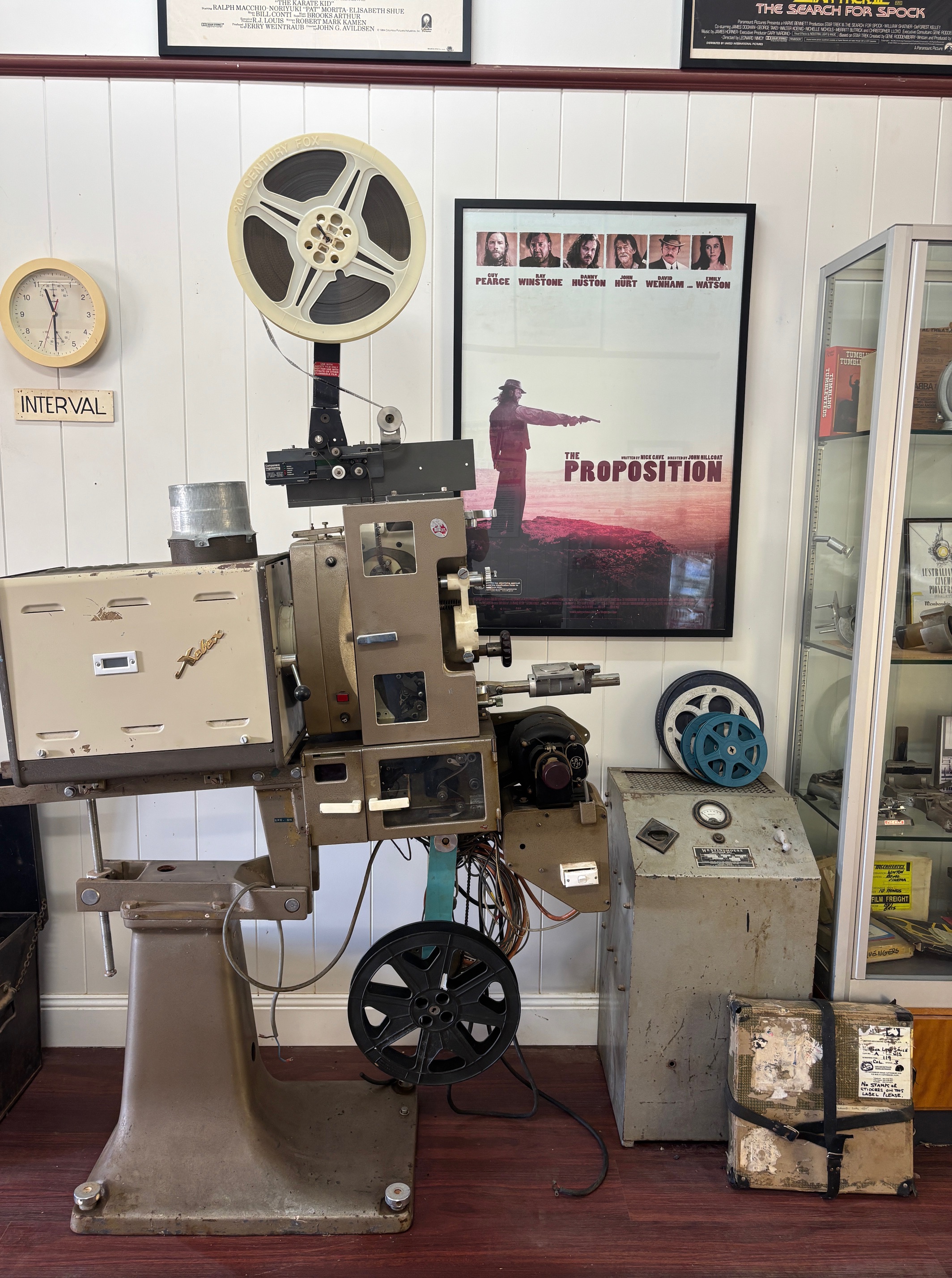
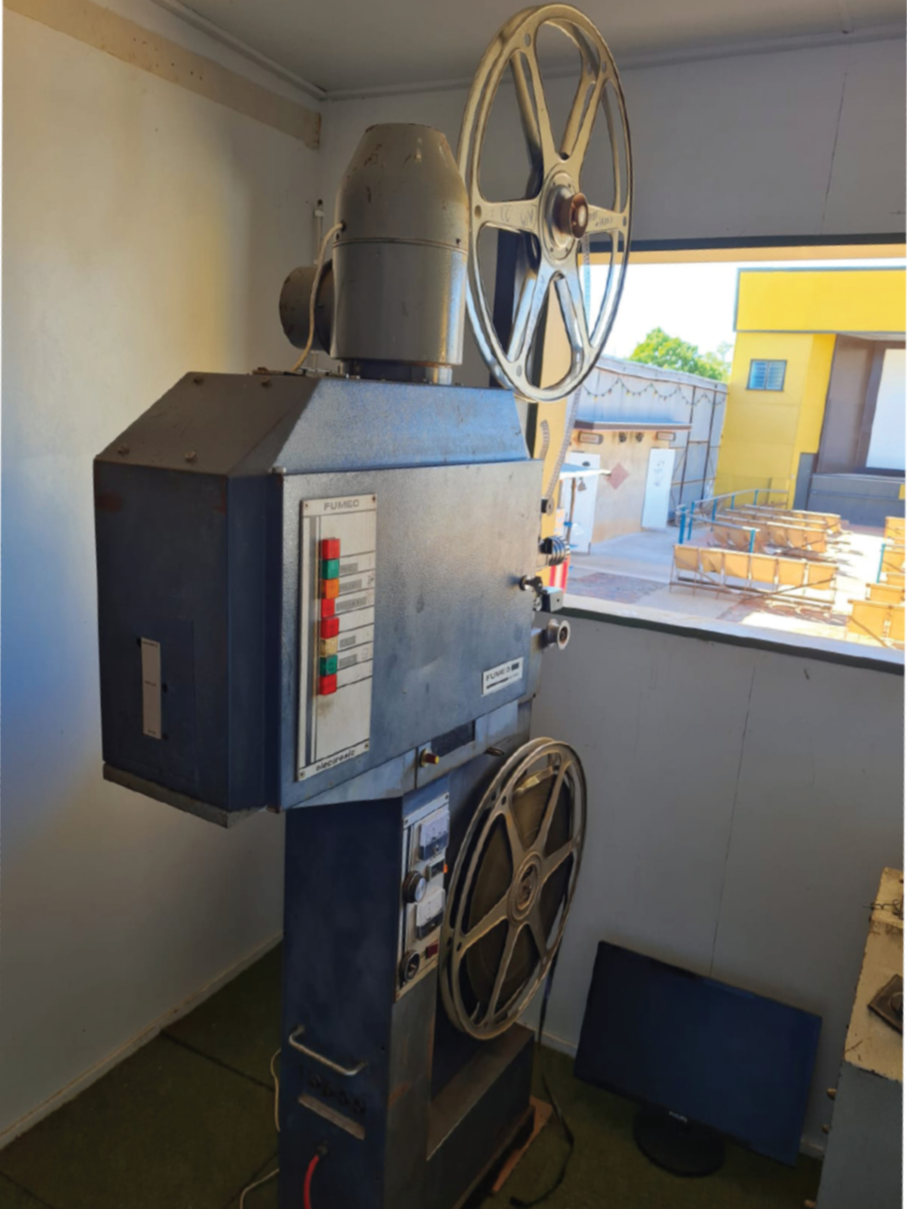
If you walk up the stairs inside the museum, you can peek inside the projection room and learn about the different projectors used by the theatre, including the Westrex projector and Xenon 35mm film projector. Visitors can even see a nitrile film spool. For over half a century (1938-2005), the Royal Theatre screened movies on 35mm nitrite film – a single movie would be stored on 5-6 spools of films, each holding 20 minutes of captivating storytelling.
Under the sky
Visitors are often stopped in their tracks as they walk to the exterior part of the theatre – I know I was the first time I saw it. Under foot are bricks salvaged from the wreckage of the 1938 fire, and lined up across the theatre viewing area are sling back chairs to sit in and enjoy film nights under the stars. Here, more interpretive panels are placed to share stories of the theatre’s multitude of uses over the years, notably as a place for skating events and boxing matches throughout the 30s and 40s.

Venture further and you find references to Hollywood in the Outback, with facts about movies filmed in the Winton region – like the Proposition and Mystery Road – and local stars that made it to the big leagues, such as Jason Clarke (Actor) and Joseph Brumm (Creator of Bluey). The theatre notably takes part in the Vision Splendid Outback Film Festival, Australia’s only Outback film festival. Every year, the festival showcases 50+ feature films, documentaries, and shorts, and hosts special events such as film location tours and Breakfast with the Stars.
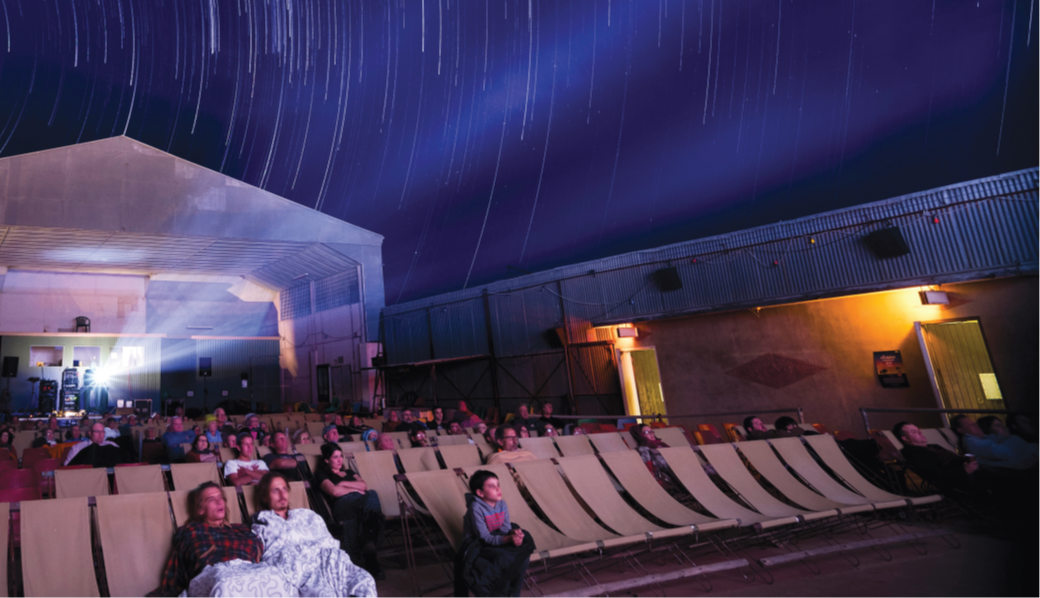
The theatre maintains its relevance as not only a place of entertainment, but one of history, embodied by community spirit and connection.
Credit goes to the wonderful, passionate and extremely handy team of volunteers who worked tirelessly to install the display and ready the theatre for its reopening in April, coinciding with Winton’s 150th anniversary celebrations.
Next time you visit Winton, make sure you stop in and take a tour through the theatre, and stick around for a Nostalgia Night. Experience for yourself the wonder of the open-air venue.


 Queensland Museum & Community Collections
Leave a comment